LISMA April 2026 Newsletter
|
|
| LISMA distributes a quarterly newsletter that features our upcoming events, partner news, and important invasive species topics and resources for stakeholders in the LISMA region.
If you know someone who would like to receive this newsletter, or would like to contribute an article to our newsletter, please contact the LISMA coordinator. |
|
|
| Glacierland RC&D serves as host for the LISMA Facebook Page and posts all relevant LISMA events, updates, posts and newsletters from the Glacierland Facebook Page.
To stay updated on LISMA partner events and news between these quarterly newsletters, please like and follow Glacierland RC&D on Facebook. |
|
Phragmites Restoration Education Day
|
|
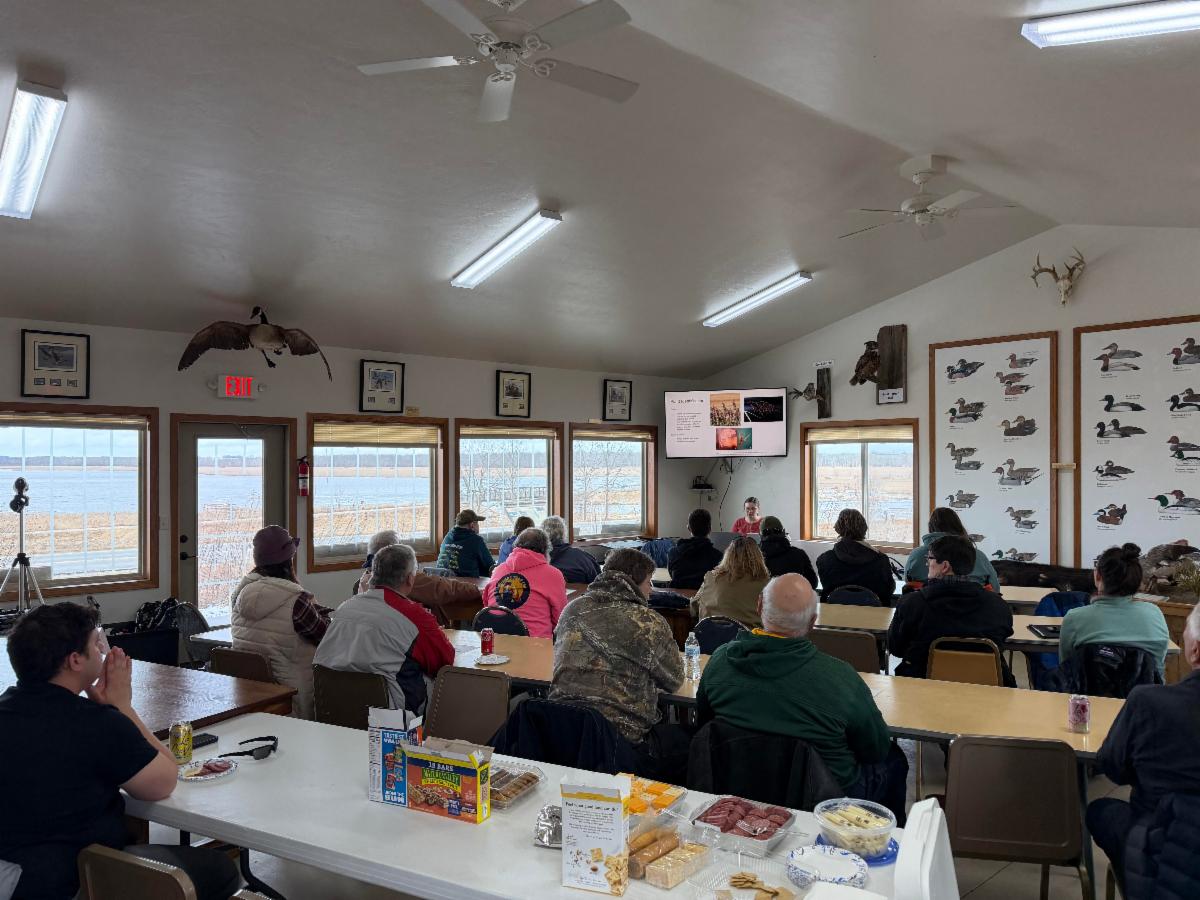
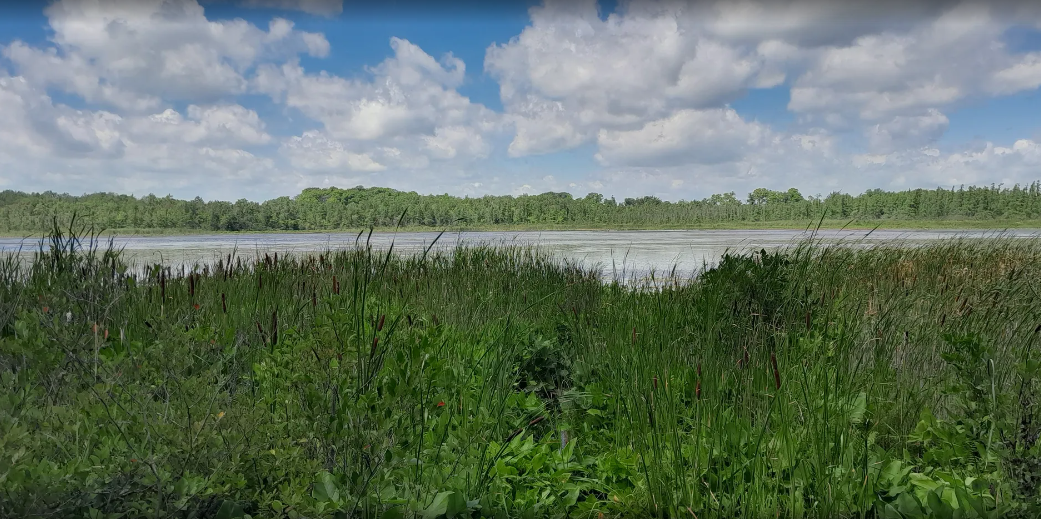
| On Wednesday, March 11th, LISMA held their Phragmites Restoration Education Day where attendees learned about non-native phragmites. Speakers from Glacierland RC&D, Stantec, WI DNR and others presented on topics such as plant id, control treatments, WI wetland permitting and more. We had a great turnout with an engaging crowd which created an |
|
|
| open space for attendees to have a conversation with the presenters and each other.
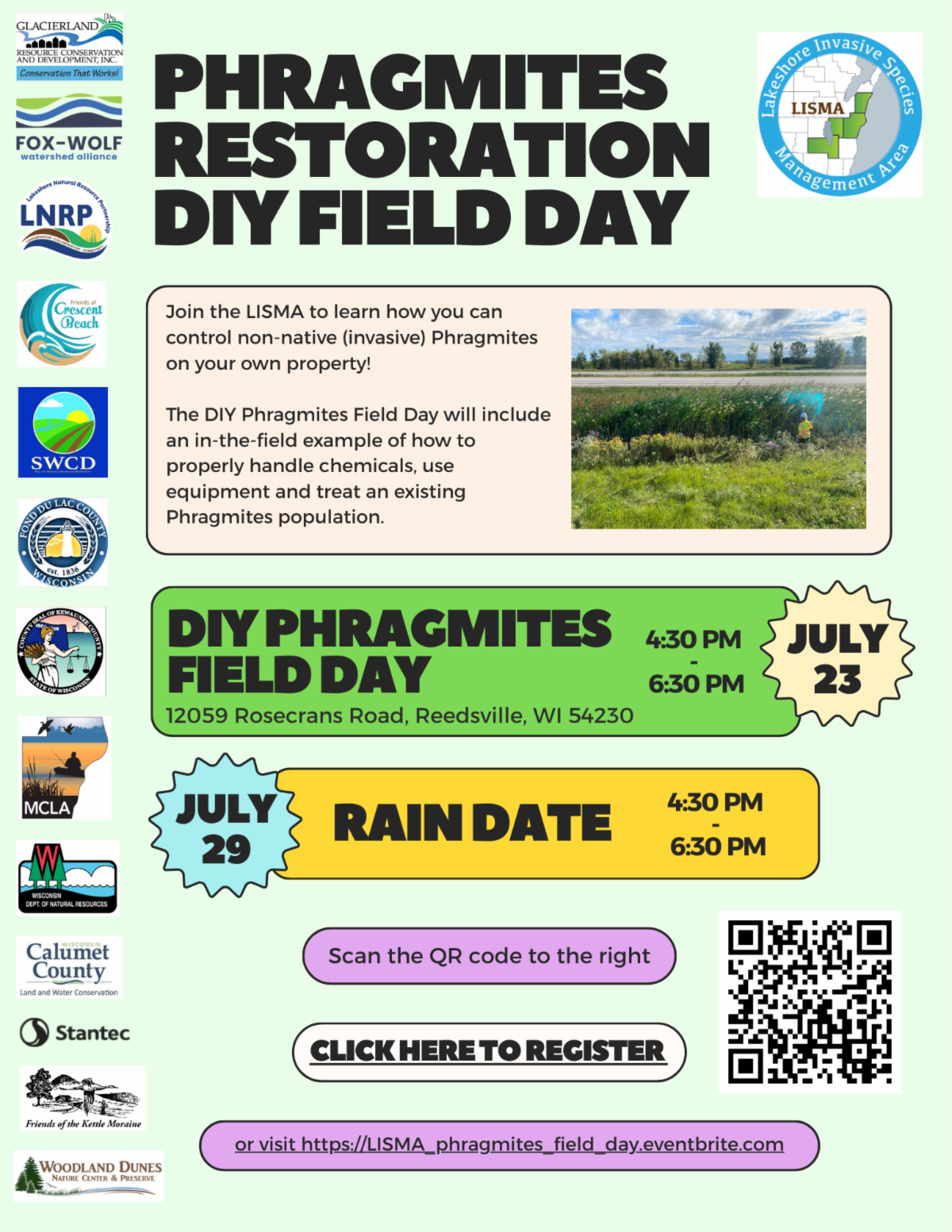
This event was the first part of a two part workshop LISMA is having this year. On Thursday, July 23rd, LISMA will be hosting a Phragmites Restoration DIY Field Day. Registration is currently open so get your e-ticket before space fills up. Click here to register.
We also wanted to say THANK YOU to the Neustadter Nature Center at Collins Marsh for allowing us to host our education day at your facility. Please click on the link to check out their events and support their work conserving the beautiful marsh in Manitowoc County. https://collinsmarsh.org/ |
|
| Clean Boats Clean Waters Watercraft Inspectors – Kewaunee County
Glacierland RC&D is seeking watercraft inspectors for the Clean Boats Clean Waters program in Kewaunee County. This is a part time, 15-20 hour per week limited term position for May – August 2026.
Primary Duties will include:
- Complete Clean Boats Clean Waters training workshop.
- Inspect watercraft and trailers for invasive species at public water access sites.
- Educate the public on how to prevent the spread of aquatic invasive species.
- Distribute informational materials to boaters.
- Conduct a verbal survey and enter data to the SWIMS online database.
- Participate in State-wide led efforts including Drain Campaign, AIS Snapshot Day, and Landing Blitz
Inspectors are required to work during peak boating hours including weekends and some holidays. Compensation for this position is $16-$18 per hour. Employee will need to provide their own transportation to work sites.
Application Deadline: Open until filled.
Interested applicants should email a cover letter and resume along with 2 references to Valerie O’Connor at valerie@glacierlandrcd.org.
Questions can be directed to Valerie O’Connor at valerie@glacierlandrcd.org or
920-808-1225. |
| Clean Boats Clean Waters Watercraft Inspectors – Manitowoc County
Glacierland RC&D is seeking watercraft inspectors for the Clean Boats Clean Waters program in Kewaunee County. This is a part time, 15-20 hour per week limited term position for May – August 2026.
Primary Duties will include:
- Complete Clean Boats Clean Waters training workshop.
- Inspect watercraft and trailers for invasive species at public water access sites.
- Educate the public on how to prevent the spread of aquatic invasive species.
- Distribute informational materials to boaters.
- Conduct a verbal survey and enter data to the SWIMS online database.
- Participate in State-wide led efforts including Drain Campaign, AIS Snapshot Day, and Landing Blitz
Inspectors are required to work during peak boating hours including weekends and some holidays. Compensation for this position is $16-$18 per hour. Employee will need to provide their own transportation to work sites.
Application Deadline: Open until filled.
Interested applicants should email a cover letter and resume along with 2 references to Valerie O’Connor at valerie@glacierlandrcd.org.
Questions can be directed to Valerie O’Connor at valerie@glacierlandrcd.org or
920-808-1225.
|
|
Kettle Moraine State Forest – Northern Unit 2026 Volunteer Opportunities
|
|
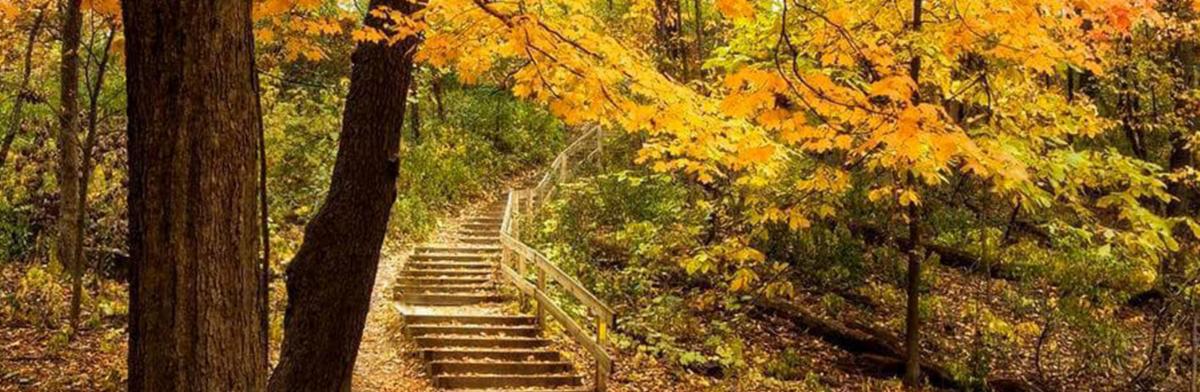
| This year marks the eighth year of volunteer efforts to create positive change in our environment. Many invasive species we’ve been targeting can significantly reduce the biodiversity of native flora in the Forest.
We are fortunate to have 12 State Natural Areas (SNAs) within the Kettle Moraine State Forest–Northern Unit. These areas preserve some of Wisconsin’s finest prairies, forests, and wetlands, and are home to 90% of the state’s threatened and endangered plant species and 75% of its animal species. Over the past six years, we have focused intensive efforts on two of these SNAs. |
| Haskell Noyes State Natural Area
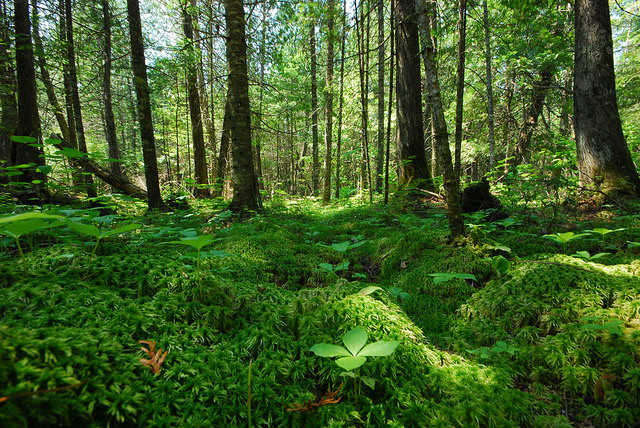
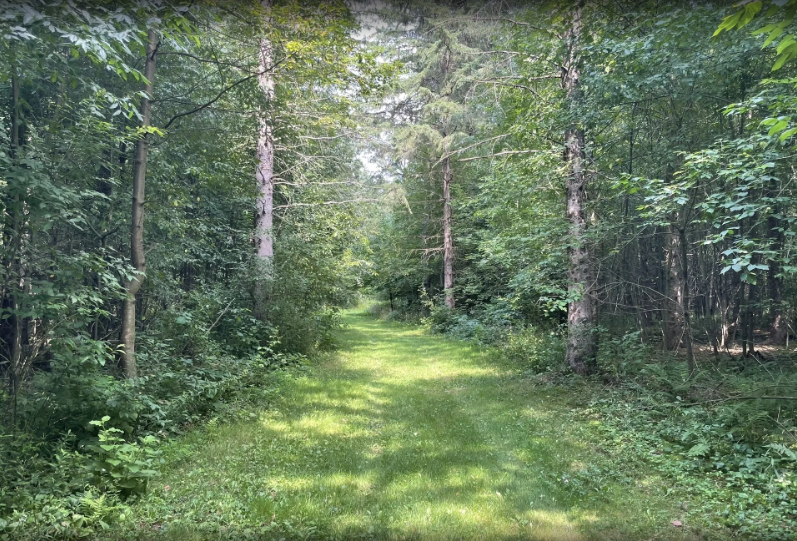
Haskell Noyes SNA is a 61-acre dry-mesic forest that was never heavily logged during the 19th century. Purchased in 1947 to prevent logging, it became a State Natural Area in 1952. Its rich plant diversity is threatened by invasive species like garlic mustard and buckthorn—but thanks to volunteer efforts, their presence has significantly decreased.
Garlic Mustard Removal Days:
• Tuesdays: May 5, 12, 19, 26, June 2 (5–7 PM)
• Thursdays: May 7, 14, 21, 28, June 4 (5–7 PM)
• Saturdays: May 9, 16, 23, 30, June 6 (9 AM–12 PM)
*Meet at the Haskell Noyes parking lot on GGG |
|
| Spruce Lake Bog State Natural Area
One of the southernmost bogs in Wisconsin, Spruce Lake Bog features plant life typical of
northern sphagnum bogs. Designated in 1968, it includes a boardwalk leading to a 35-acre lake. Volunteer work has helped reduce reed canary grass, allowing orchids, ferns, and other native plants to return.
Reed Canary Grass Removal Days:
• Tuesday, June 9 (5–7 PM)
• Thursday, June 11 (5–7 PM)
• Saturday, June 13 (9 AM–12 PM)
*Meet at the Spruce Lake Bog parking lot on Airport Road |
|
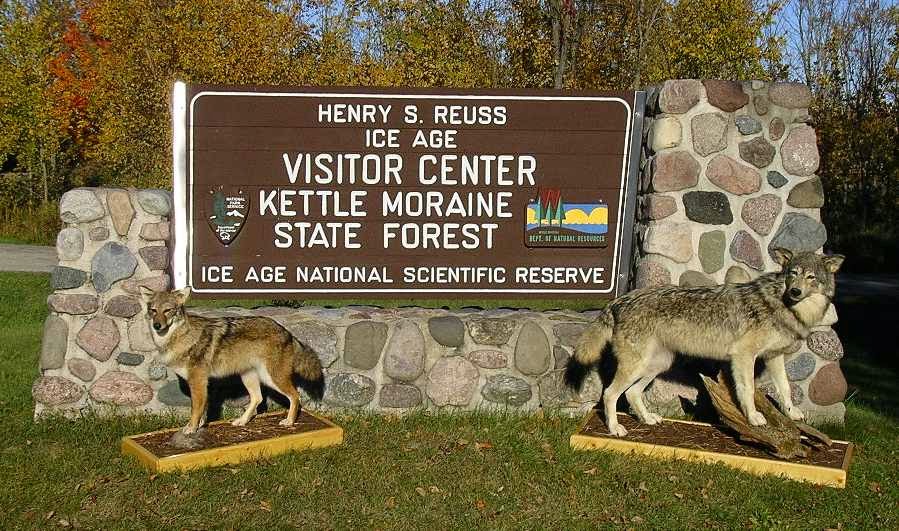
| Ice Age Center (OutWiGo Statewide DNR Event)
Invasive plants are taking a toll on Wisconsin’s landscapes. The DNR is working with citizens and partners to slow the spread of invasive species. Through educational outreach, strategic planning and active management, we are protecting our environment from Invasives. Join us for a short introduction on invasive species impacting the forest and then help us cut and haul some invasive woody vegetation! Participants are encouraged to bring a fillable water bottle, lunch, insect repellent, sunscreen, sturdy footwear and gloves. Hand tools will be provided. No experience is necessary to participate and all ages are welcome. All individuals 17 and under must be accompanied by an adult. This event is weather-dependent.
Event Location: Kettle Moraine State Forest – Northern Unit, Henry S. Reuss Ice Age Visitor
Center N2875 Hwy 67, Campbellsport, WI 53010
Event Contact: Kettle Moraine State Forest – Northern Unit, 262-626-2116, DNRFWPKMNU@wisconsin.gov |
| Zillmer Trail Area
Japanese Hedge Parsley is an invasive plant that spreads easily by clinging to clothing and animal fur. Efforts focus on hiking trails where spread is most likely.
Volunteer Days:
• Tuesday, June 23 (5–7 PM)
• Thursday, June 25 (5–7 PM)
• Saturday, June 27 (9 AM–12 PM)
• Tuesday, June 30 (5–7 PM)
*Meet at the Zillmer Shelter on SS |
| Cut-Leaf Teasel are currently limited in spread meaning this invasive plant can still be contained with early action.
Volunteer Days:
Wednesday, July 8 (5:30 -7 PM)
Thursday, July 9 (5:30 -7 PM)
*Meet at the Zillmer Shelter on SS |
|
| Greenbush Kettle Prairie
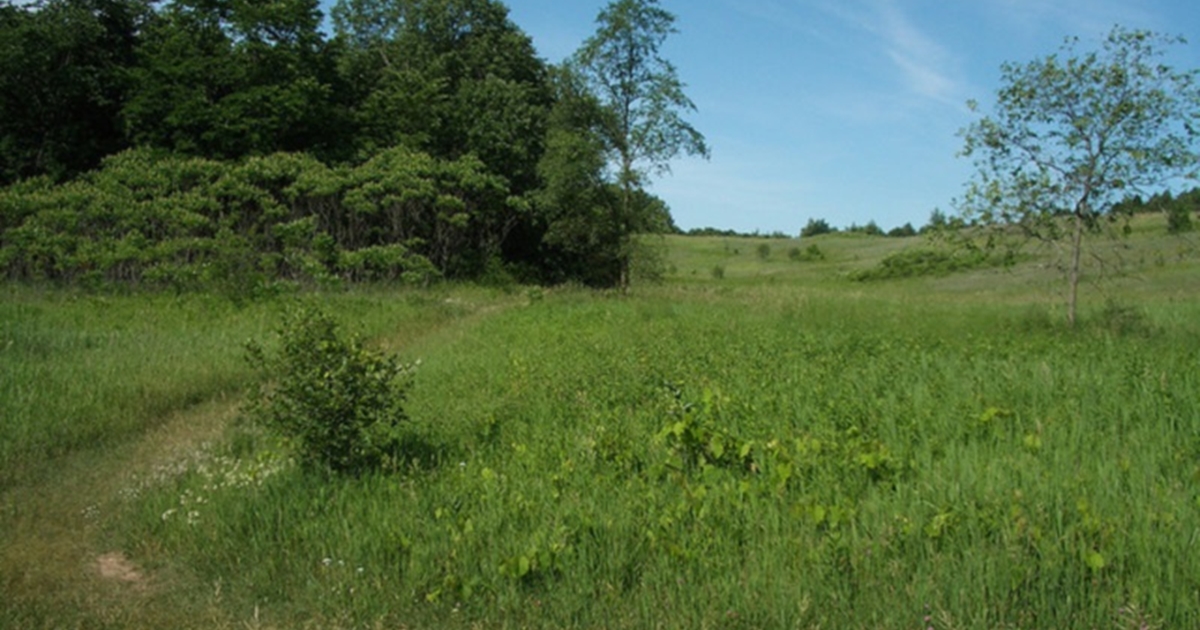
This unique site contains original prairie vegetation, including undisturbed slopes and a
recovering former farm field. Efforts focus on removing invasive plants to support native prairie restoration.
Volunteer Days:
• Saturday, July 18 (9 AM–12 PM)
• Saturday, July 25 (9 AM–12 PM)
*Meet at the parking lot for Shelter #5 (north of the prairie) |
|
| Group outings are organized by the Stewards of the Northern Kettle Moraine. Additional dates/times may be arranged—contact Connie to coordinate. There are no volunteer events scheduled in August; fall woody invasive removal dates will be announced later
For questions or to join the email list, contact:
Connie Ramthun
connieramthun@gmail.com
920-533-8939
You’ll receive details on what to wear, what to bring, and reminders before each event.
Thank you!
The Friends of the Kettle Moraine are dedicated to protecting our land and water. Volunteering offers a meaningful way to contribute to preserving biodiversity while enjoying the beauty of the forest. |
|
|
|
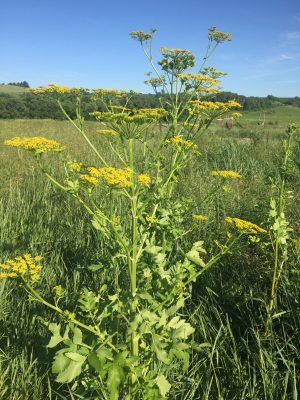
| Wild parnsip (Pastinaca sativa) is a Eurasian plant introduced to North America by early settlers for its edible roots. Wild parnsip is a monocarpic perennial plant which means in the first year, the plant establishes itself as a rosette; in the second and third years, the flowers actively bloom and then the entire plant dies. The dead stalks will then remain standing.
Wild parnship is a threat to Wisconsin’s prairies, oak savannas, fens, old grassland fields and roadsides. It is a broad habitat tolerant plant which affects dry and wet habitats alike. Wild parsnip thrives in disturbed environments and along edges of various habitats. A common place to see wild parnship in Wisconsin are in or near ditches and trails with high level of traffic.
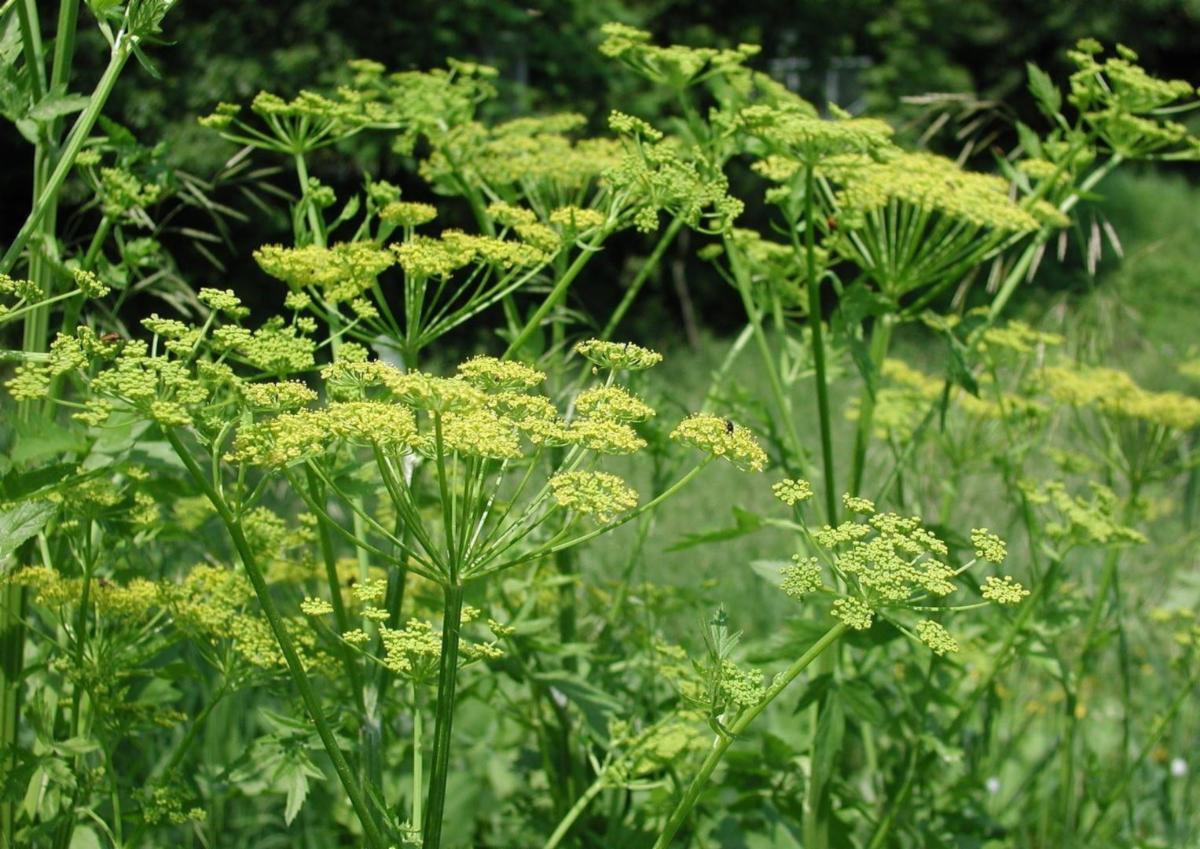
Wild parnsip is easily identifiable in the summer by their numerous small, 5-petal |
|
| yellow flowers in umbels that are 2-6 inches wide at the tops of the stem and branches. The flowering stems are stout, hollow and can grow up to 5 feet tall. It has 2-5 pairs of opposite, sharply toothed leaflets that are alternatively positioned. Understanding how to identify wild parsnip is important due to having many look-alike native species such as Golden Alexander, Cow parsnip and Queen Anne’s Lace. Check out this brochure created by the Wood County Land and Water Conservation Department with examples of other look-alikes.
Wild parsnip is a restricted species on the Wisconsin NR40 list meaning, it is a known non-native species in the state that has not fully established itself and causes or has the potential to cause significant environmental or economic harm or harm to human health. Without proper caution, wild parsnip can be dangerous to humans causing extreme phytophotodermatitis. Phytophotodermatitis is a painful rash causing blisters and discoloration of the skin after touching wild parnsip sap and being exposed to the sunlight. |
|
|
Control
Mechanical:
Hand pulling can be effective but only for young plants in soft soils.
Cutting is a good option when targeted to small populations. To successfully kill the plant by cutting, the taproot must be severed 1-2 inches below the soil or else it will survive.
Chemical: Foliar spray is an effective method when removing wild parsnip For maximum effectiveness, spray glyphosate onto the rosette leaves during the early spring before the native species begin to sprout or late fall after the plant has gone dormant.
If you would like to learn more about specific chemical usage or how to combine both chemical and mechanical methods to control, view this Wild Parsnip Factsheet created by the University of Wisconsin-Extension Team Horticulture. |
|
|
Prevention Steps
- The best method of prevention is by controlling any known populations using control options listed above.
- Focus on early detection and prevention measures like removing young rosettes and seed heads before they mature.
- DO NOT COMPOST. Collect seeds, removed plants, or dead plants, and place them in a trash bag and dispose of them at a landfill.
- Properly clean boots and equipment used in areas with known populations of Wild parsnip to prevent further spread.
- Do NOT buy, sell, or plant Wild parsnip in Wisconsin; it is illegal.
Sources: Wisconsin Department of Natural Resources and University of Wisconsin-Extension
|
|
|
LISMA is a program of Glacierland RC&D. Glacierland RC&D is a nonprofit, grass-roots organization that is committed to wise use and conservation of our natural resources and human resources. We promote sustainability on all levels – environmental, social and economic. This is accomplished by bringing together various agencies, organizations, and people to work on projects addressing issues of sustainability in eastern Wisconsin.
Glacierland RC&D | P.O. Box 11203 Green Bay, WI 54307
(920) 465-3006 | Email | Website
|
|
|
|
|