While a canner makes vegetables shelf stable without refrigeration, there are other ways to store your vegetables for year-round use
It’s garden time. If you planted one, you are probably awash in vegetables right now. Even more than you can eat fresh and give away to friends and neighbors (they see you dropping bags of zucchini on their porch in the dark of night). The answer for the excess is to figure out how to store it for use in the coming winter and fall once the garden itself has long since stopped producing.
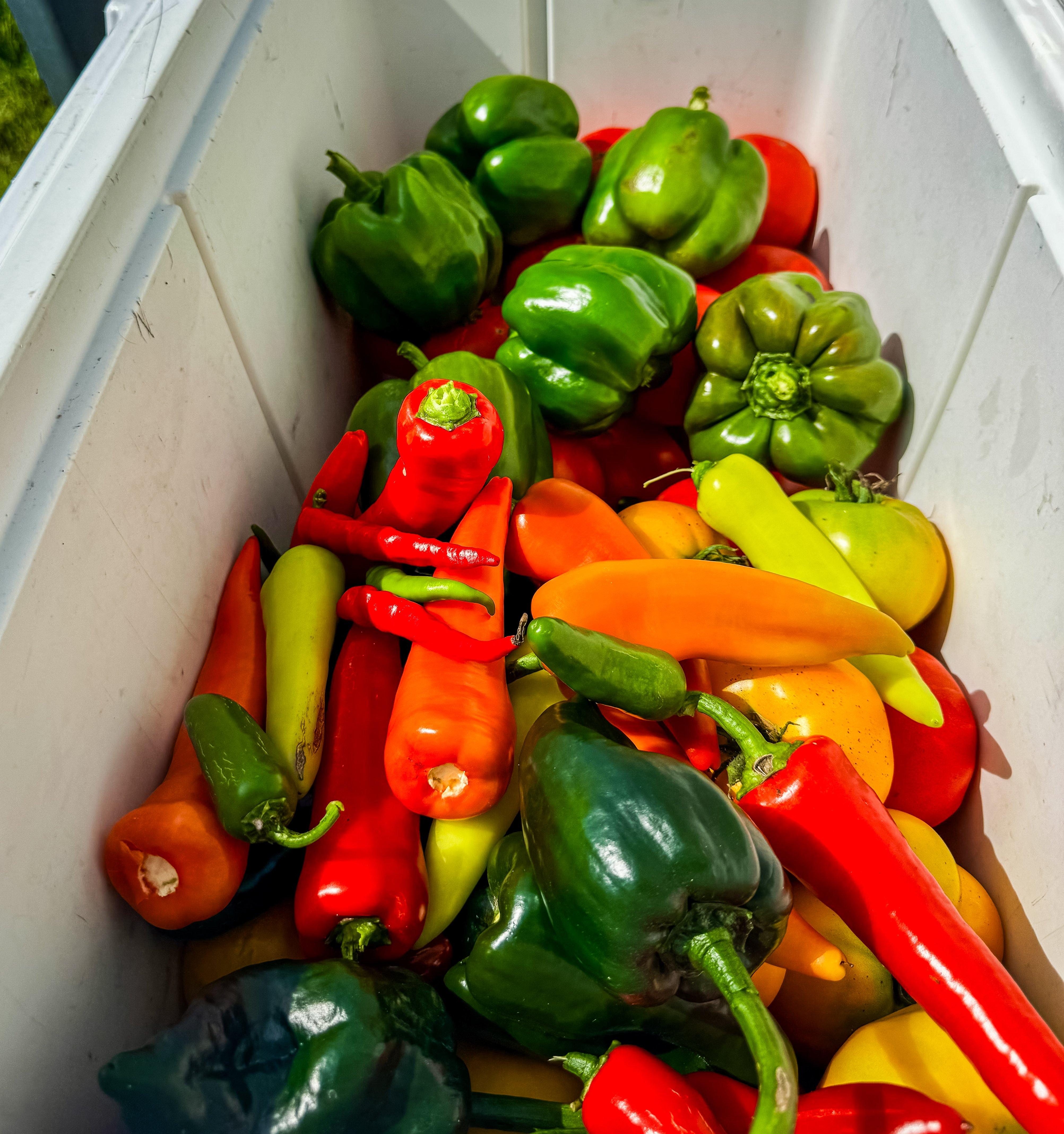
Summer for gardeners often means more produce than can be eaten fresh. Image by author
For years, the answer to that has been pressure canning. Vegetables are placed into clean glass jars and processed in a special pot under immense pressure to sterilize the contents and seal the lid airtight, making the contents shelf stable for years. It works, but not everyone has a canner. Good ones are expensive side, and the processing rules have to be followed or the results could be dangerous and messy. Plus, pressure canning is time consuming and hot, and not much fun to do on a sweltering summer day.
Luckily, most vegetables can be stored for long term use in other ways. Freezing is the main method we use, but there are other ways to get it done as well. Here are a few for specific vegetable types.
TOMATOES
Tomatoes are a prolific garden goodie, but they have a short shelf life as a fresh item. We preserve a bunch of tomatoes, and use them all winter long for sauces and stews.
Freezing: You can freeze fresh, ripe tomatoes whole. Freezing bursts the cell walls of the tomato, meaning you can’t really thaw them out and slice them for sandwiches and salads, but they make great salsa, tomato sauce, etc.
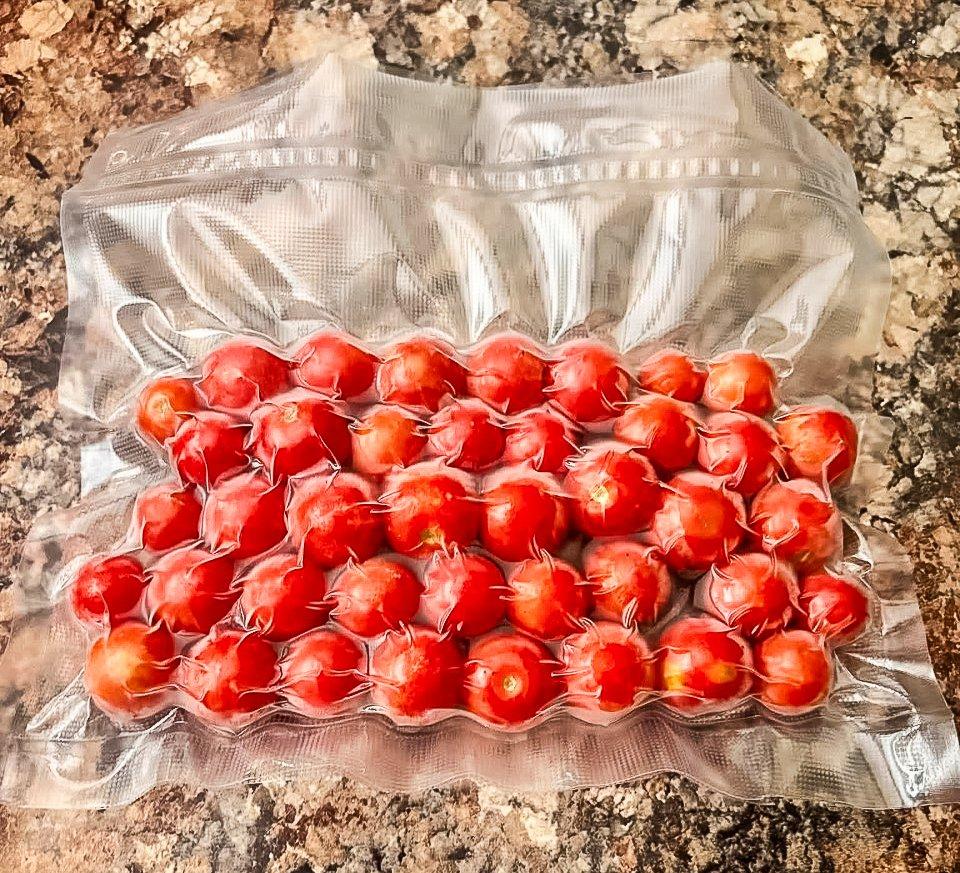
Tomatoes can be individually frozen then vacuum sealed. Image by Andrew Maxwell
Vacuum sealing the tomatoes is a great way to store them, but a good vacuum sealer pulls tight enough to crush really ripe tomatoes. The solution to that problem is to freeze them first on a sheet pan, then vacuum seal. Vacuum seal whole, not sliced, for the best storage. Once thawed, the skin peels easily from the tomato, making it even easier to turn them into sauce.
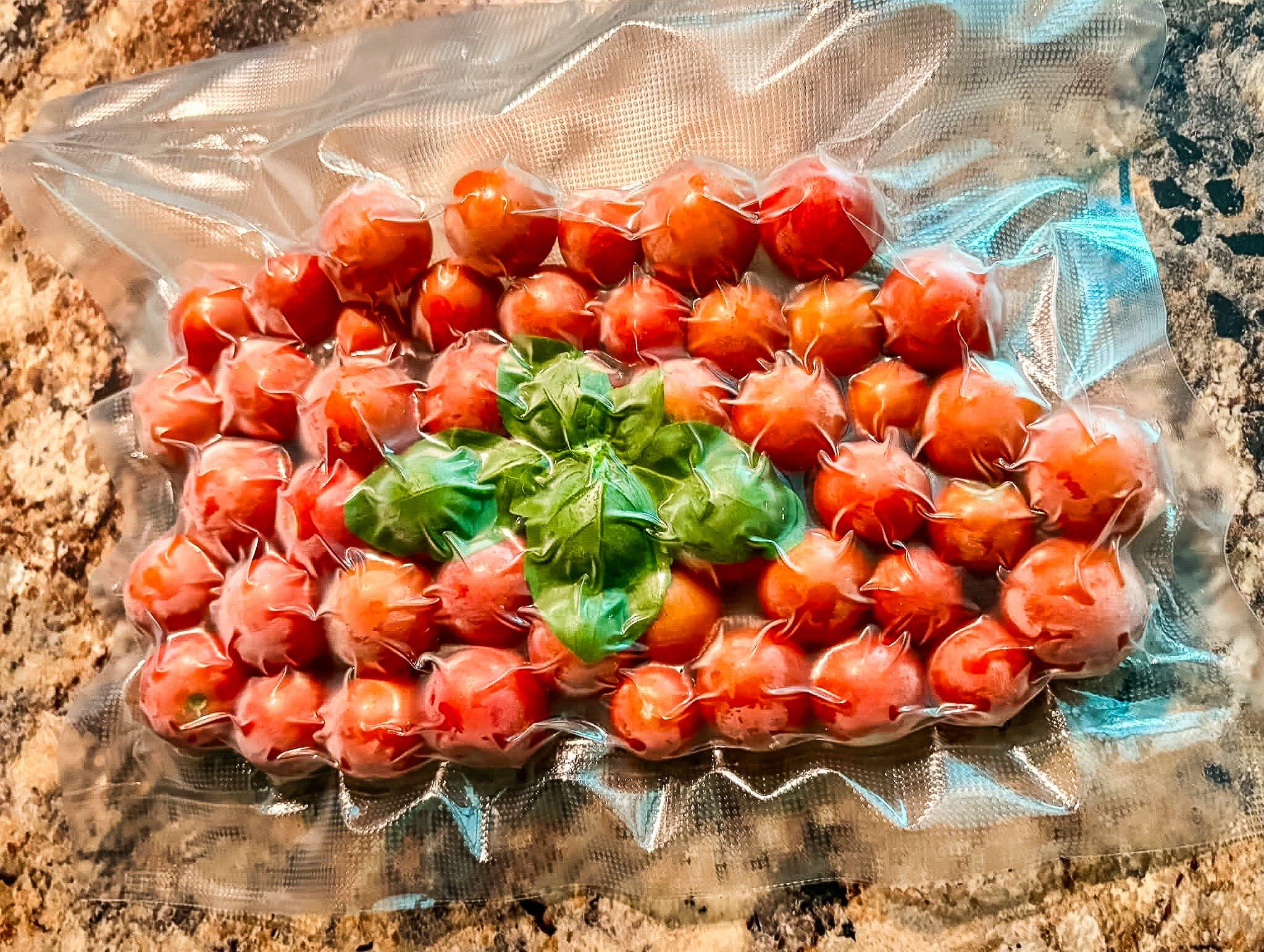
If sauce is the final destination for frozen tomatoes, you can add fresh herbs like basil to the package. Image by Andrew Maxwell
Drying: You can use either a dehydrator or your oven to slice and dry tomatoes. The resulting dried product can be added straight to recipes or reconstituted in warm water before use. Slice the tomatoes about ¼ to ½ inch thick before drying.
For the oven, spread the slices on a wire rack suspended over a sheet pan (line with parchment paper for easy cleanup). Place into the oven at the lowest temperature available. On my oven, that is 170 degrees. If your oven has a convection fan, turn it on. You can even prop the door open slightly to allow moisture to escape. Dry for 4-6 hours or until the slices feel like leather or jerky. Store in zip top bags or jars with a tight lid for up to several months.
For dehydrators, it’s even easier. Place the slices directly on the racks, leaving just a little space between each slice, and set the dehydrator between 175 and 200 degrees, if adjustable, and dry until to the same level described above.
Make and freeze tomato pies: One of my favorite things about summer is a good tomato pie. Make them with your favorite recipe or use this one, allow to cool, then wrap in plastic wrap followed by aluminum foil, and freeze. To thaw, unwrap the pies and place into a pre-heated, 300 degree oven. Bake until heated through.

You can turn excess tomatoes into tomato pie, then freeze those. Image by author
Don’t miss: THE CARNIVORE’S GUIDE TO PLANTING A GARDEN
SWEET CORN
Sweet corn is another garden favorite that all comes in at once. Corn can also be frozen. You can freeze on the cob, cut off, or cooked, your choice.
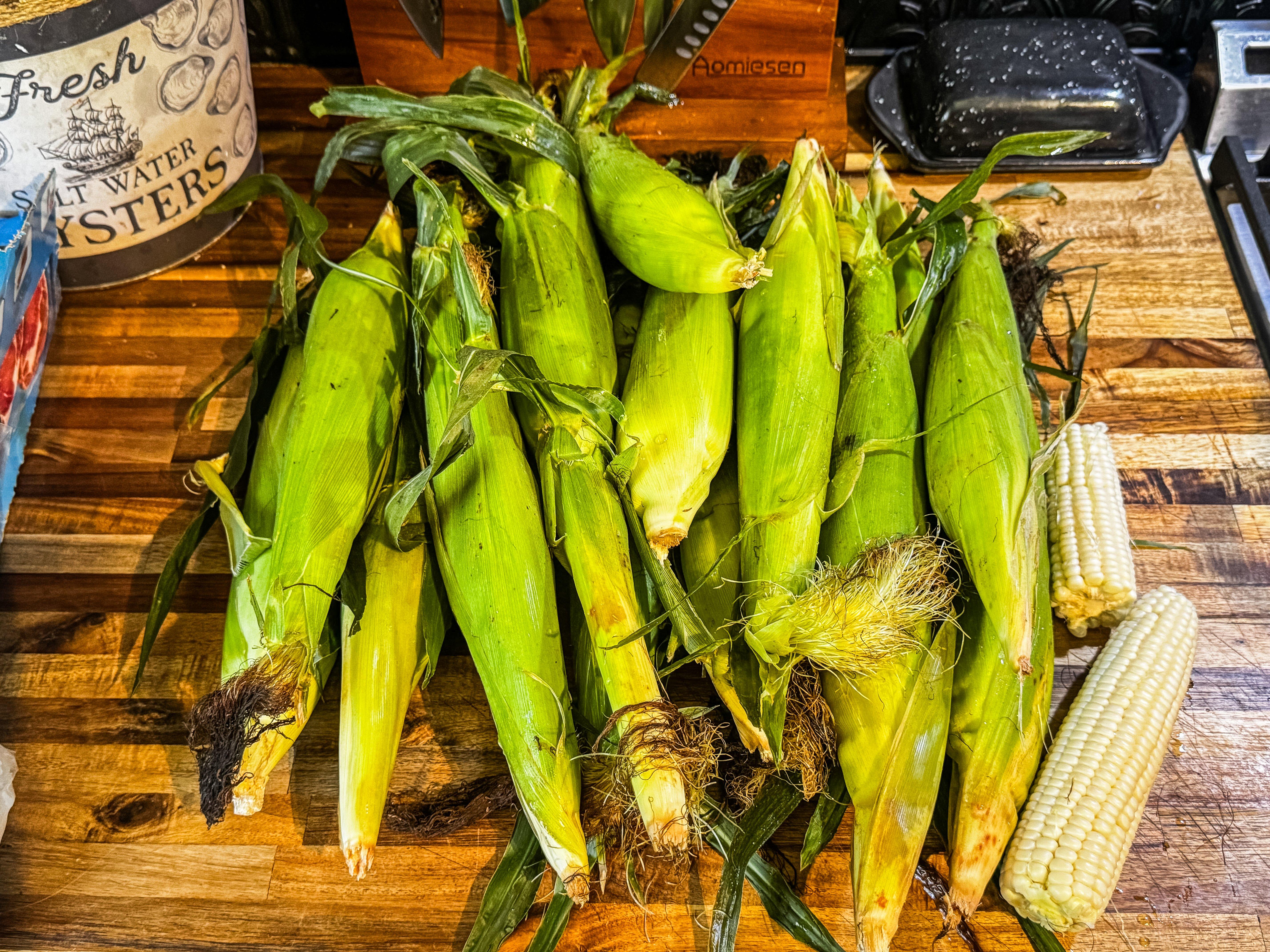
Corn comes in all at once, so stagger plantings for longer harvest periods. Image by author
To freeze on the cob, shuck the corn and heat a large pot of water to a boil. Drop the corn into the boiling water for 5-7 minutes. Remove the corn after that and drop it into the large bowl of ice water to stop the cooking process. This blanching step stops the sugar inside the corn from breaking down, maintaining the fresh flavor.
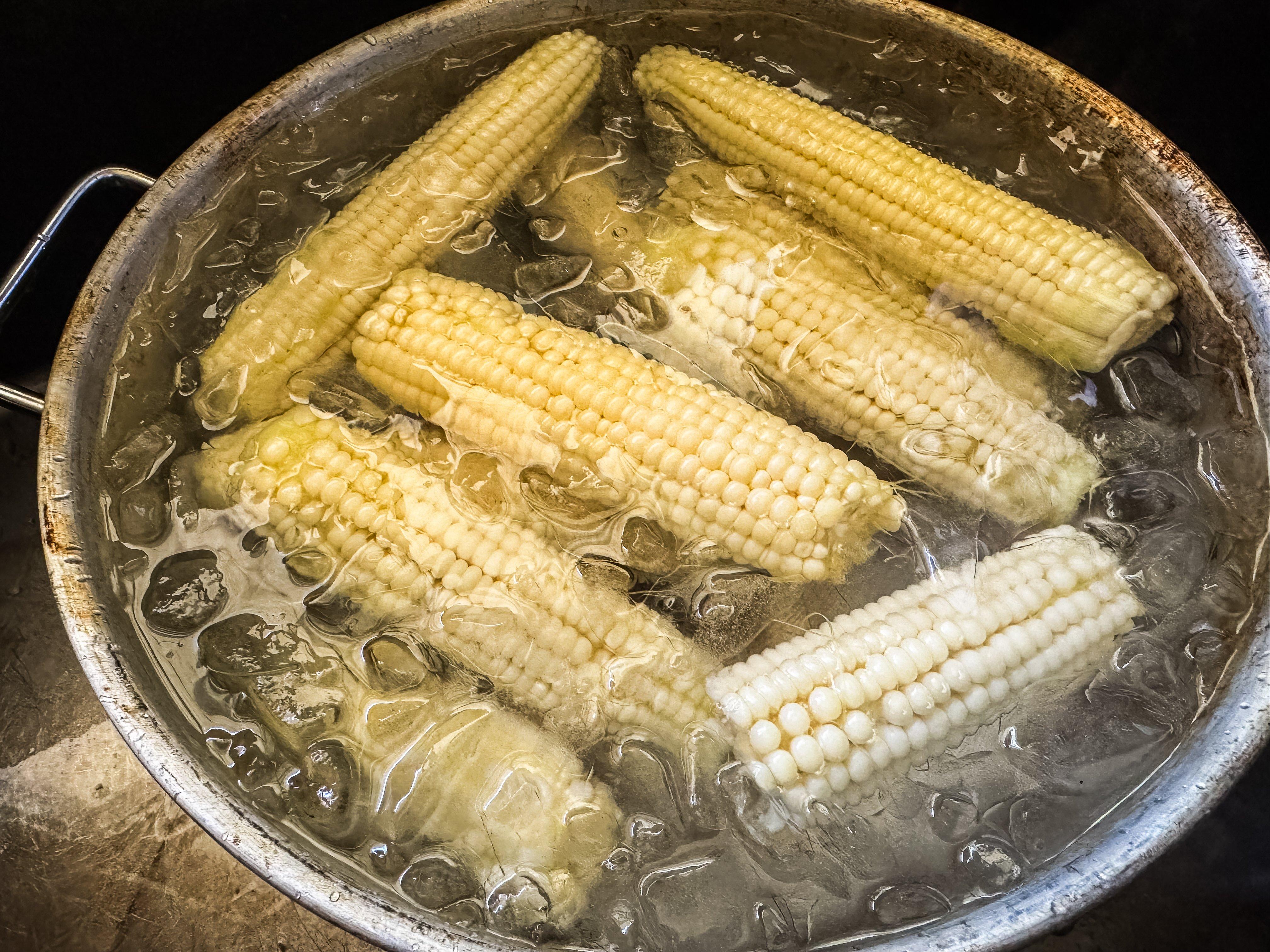
Boil the sweet corn for a few minutes, and then shock in ice water to stop the cooking process. Image by author
You can bag up the corn as-is on the cob and freeze, or you can cut it off the cob and bag before freezing.
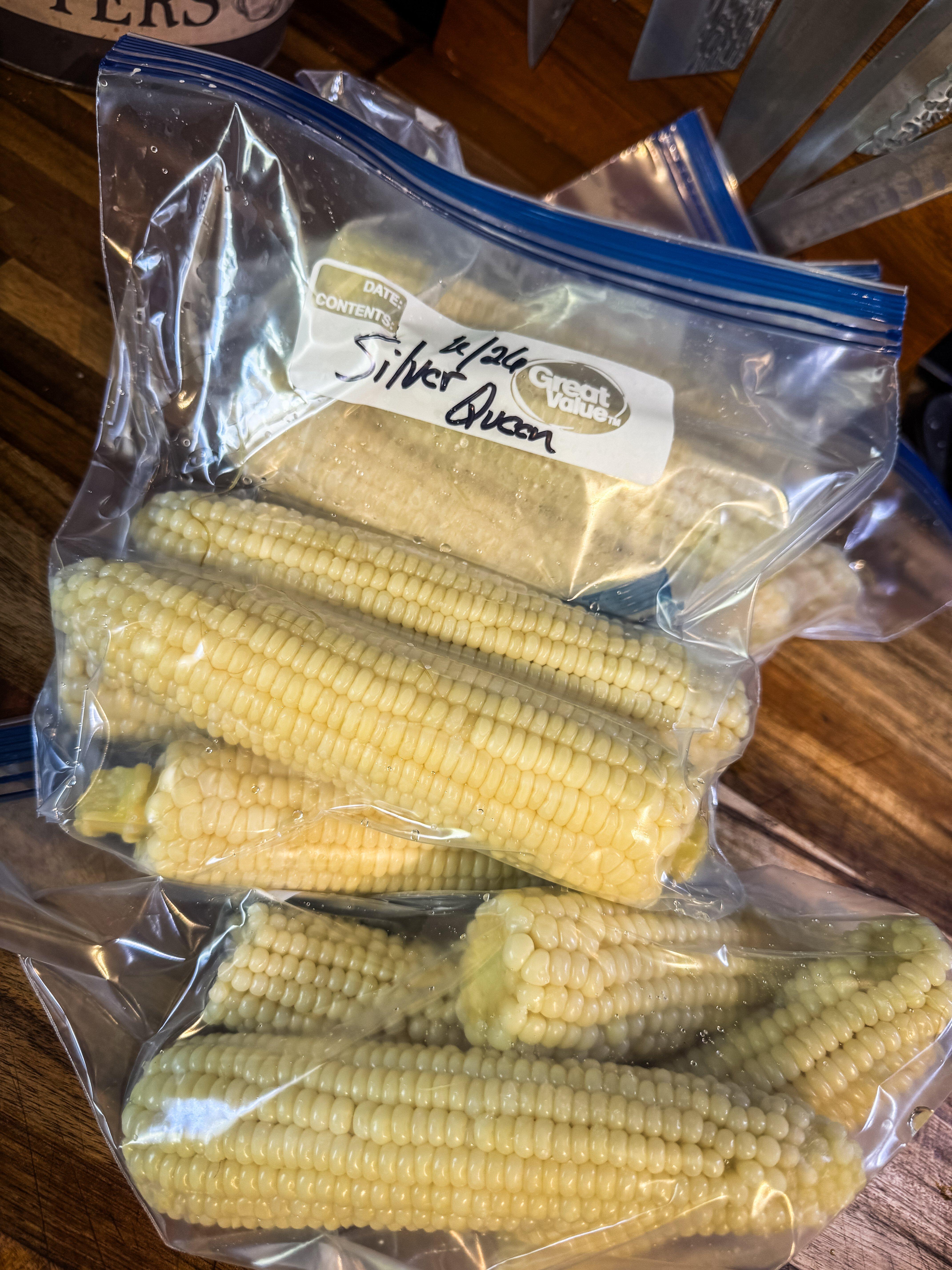
After blanching, corn can be bagged on the cob or you can cut the kernels off to save freezer space. Image by author
Alternatively, you can cut the corn off the cob without blanching, place the kernels and accumulated corn juice into a large skillet with a cup of water, two tablespoons of butter, and a tablespoon of salt. Simmer for five to ten minutes then cool before packing into ziplock freezer bags.
PEPPERS
Sweet, bell, banana, cayenne, jalapeño, habanero, you name it: peppers are one of my favorite garden bounties. To store them in the freezer, first wash and slice the peppers, remove the seeds and stems, then spread over a parchment lined baking sheet. Place that into the freezer for a few hours to overnight to freeze the peppers. Once frozen, place the peppers into zip-top bags and place directly into the freezer. The thawed peppers will be softer than fresh ones, but that helps them cook more quickly in dishes like fajitas and gumbos.
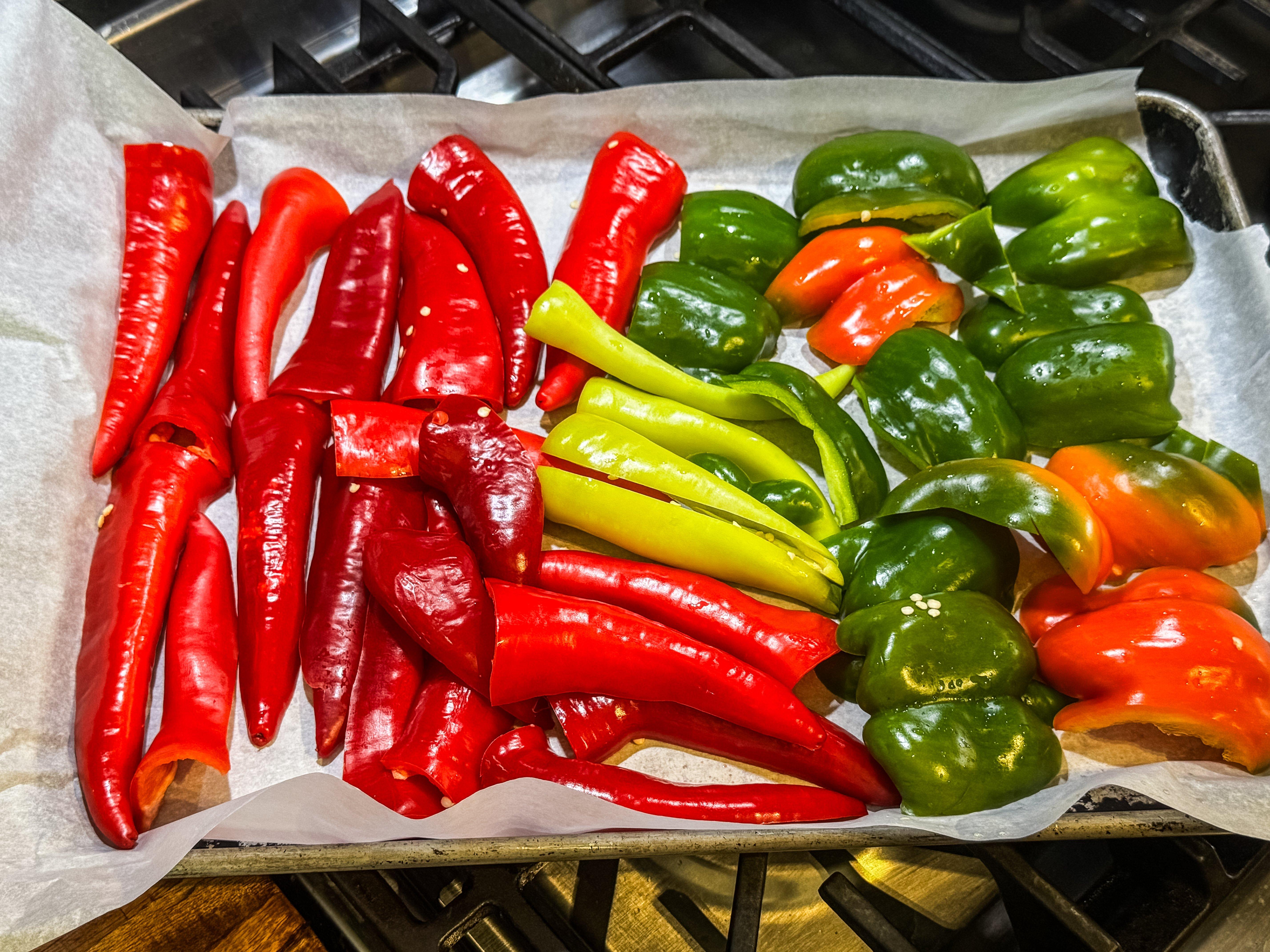
Peppers can also be sliced and pickled using this recipe for storage in the refrigerator for up to a month. Follow the same recipe you would use for red onions.
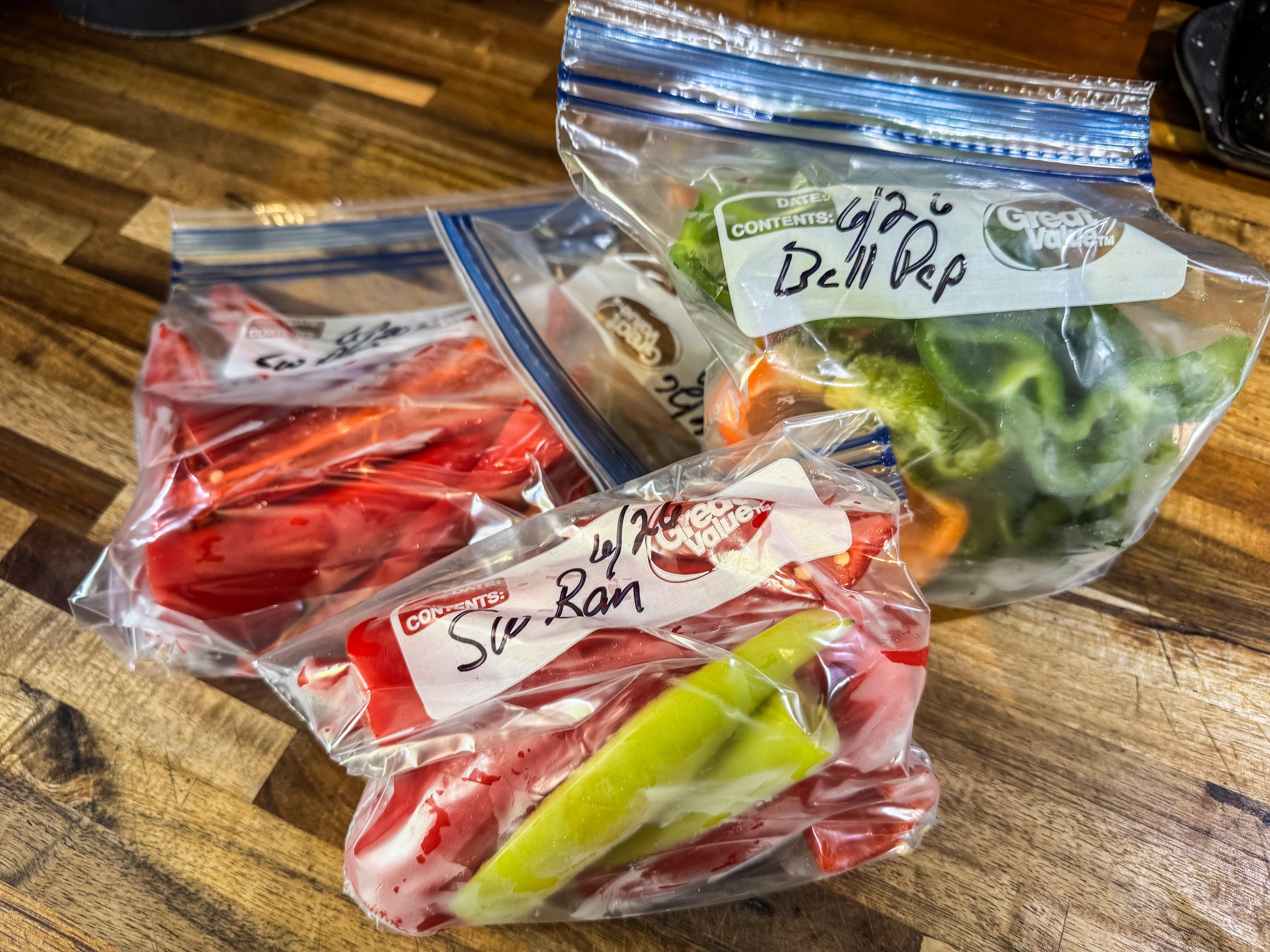
Bag the peppers according type and freeze. Image by author
Don’t Miss: HOW TO MAKE SALSA FROM GARDEN TO JAR
SQUASH
Squash like yellow and zucchini can be frozen in much the same way as peppers. Slice, lay on a parchment lined sheet pan to freeze, then bag. If you skip the sheet pan step, the squash is still usable for recipes, but it will freeze into a large lump instead of individual slices.
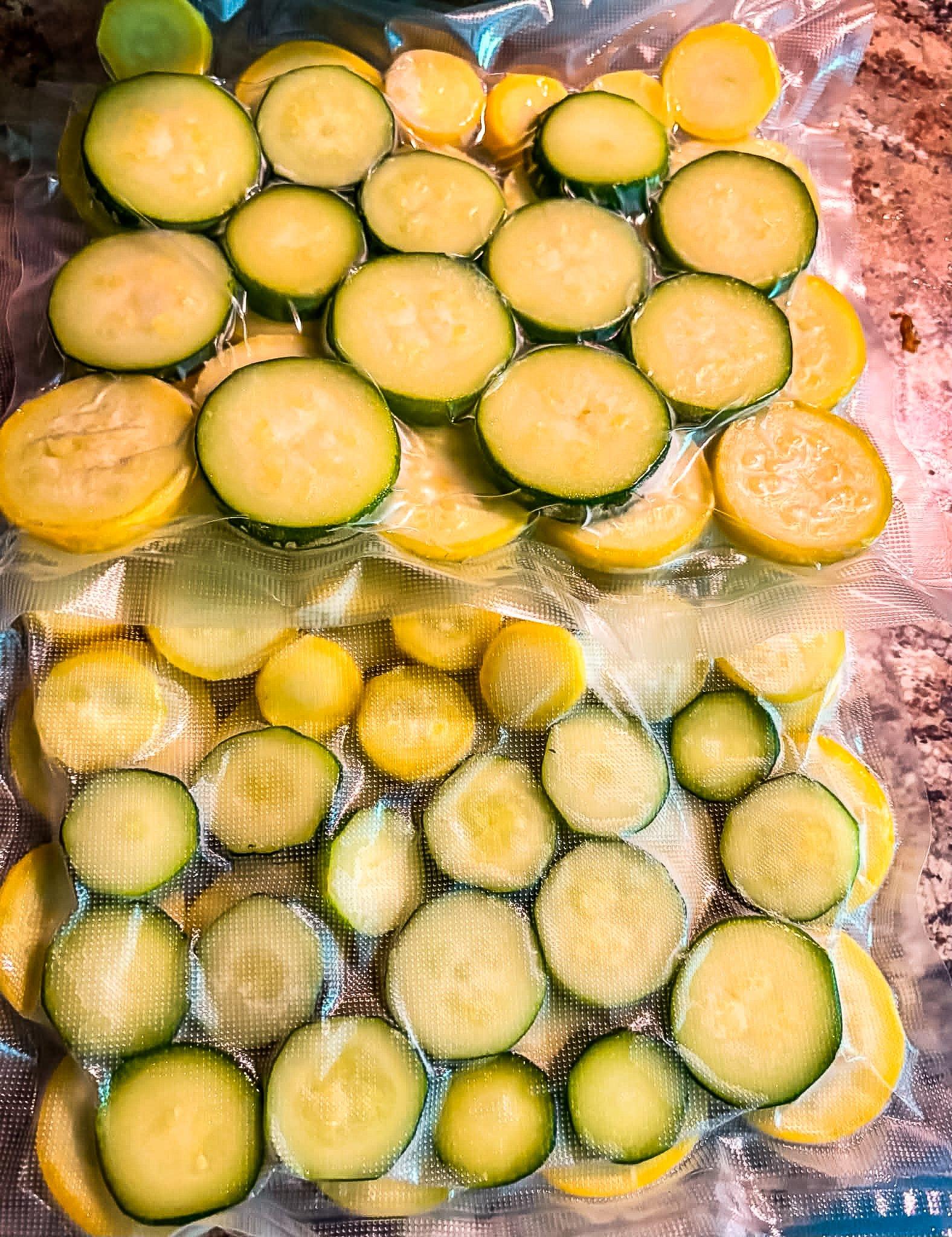
Squash can be blanched and shocked in ice water to help hold texture or frozen without blanching when texture isn’t an issue. Image by Andrew Maxwell
While squash can be frozen without blanching, the resulting thawed squash is pretty soft. To keep the texture closer to fresh, treat it like sweet corn and blanch for 2-3 minutes in boiling water before transferring to an ice bath to stop the cooking process. Pat the slices dry, then bag and freeze. Like corn, the short blanching process stops the enzyme production, resulting in a fresher flavor and texture when used.
GREEN BEANS
Green beans also benefit from blanching. You can freeze the beans whole or snapped, you choice. Start by removing the stems and strings, if your bean variety has strings, then either rinsing whole or snapping into smaller pieces.
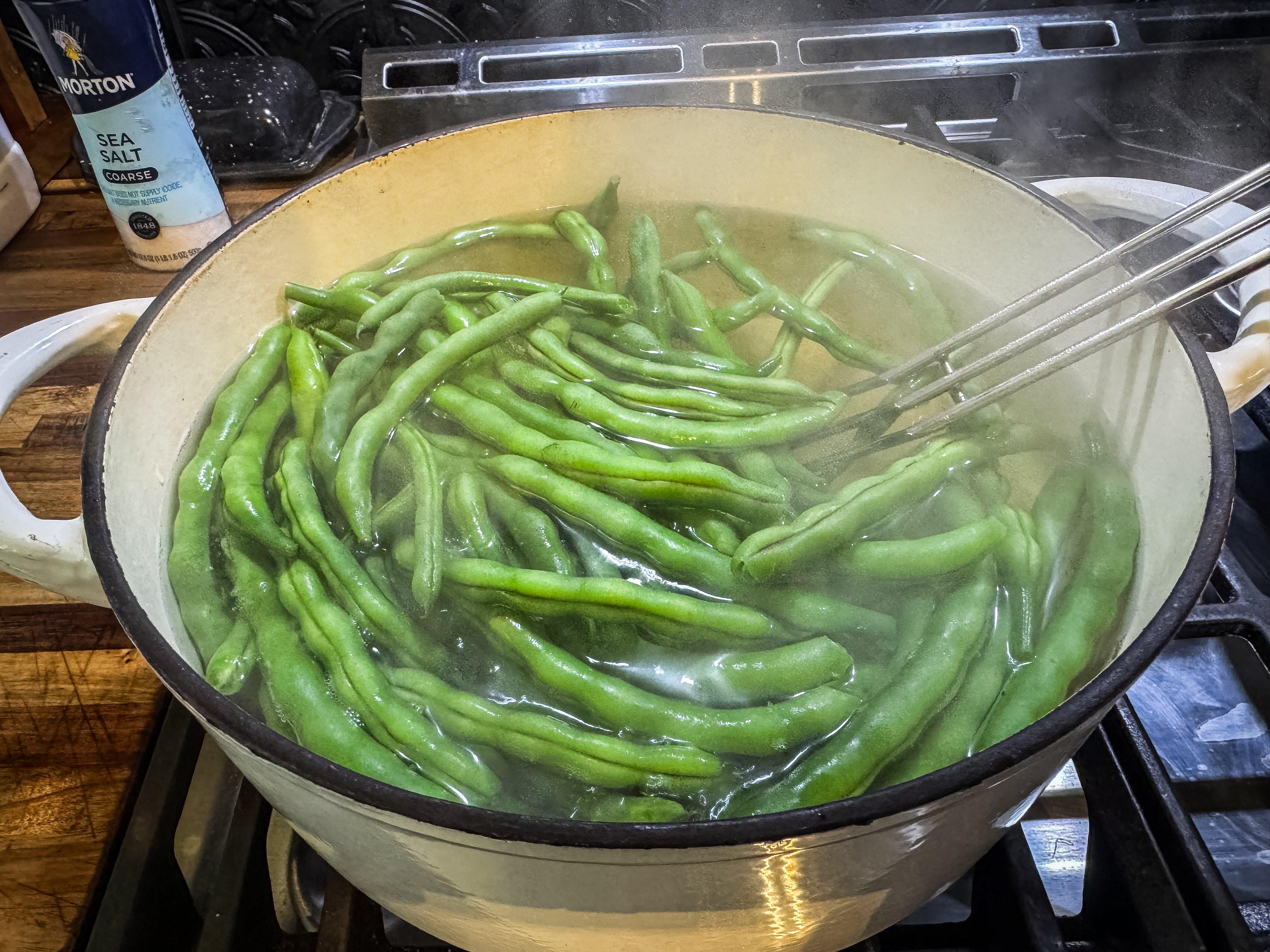
Blanch and shock green beans before freezing to hold vibrant green color and fresh flavor. Image by author
Blanch in lightly salted boiling water for 2-3 minutes and then transfer directly to ice water. Once fully chilled, pat the beans dry and bag before freezing.
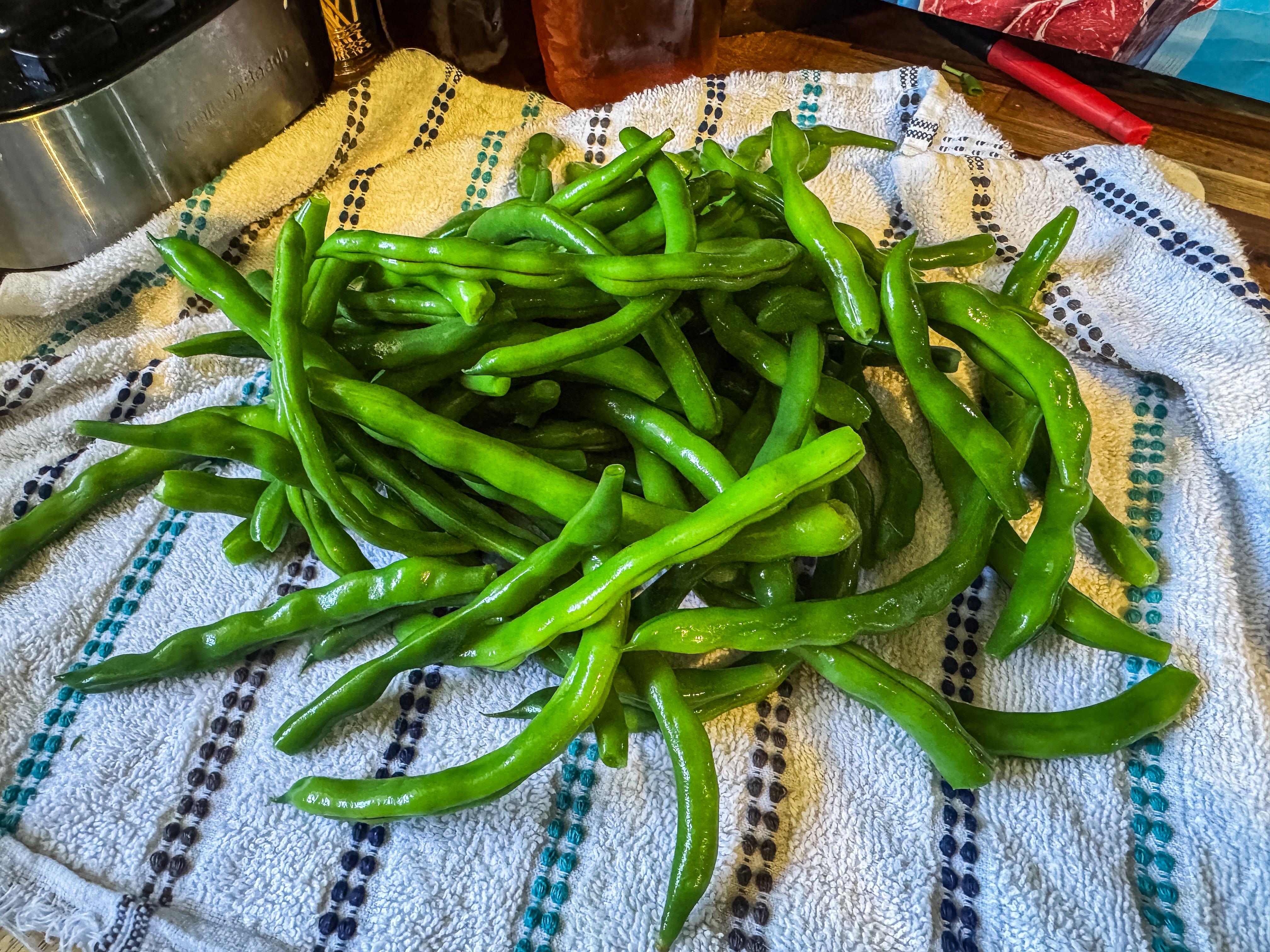
Pat the beans dry before bagging so they don’t freeze in one large block. Image by author
Potatoes and Onions: These are easy. Onions, and especially potatoes, can be stored for months in a cool, dark, dry spot. Don’t wash the potatoes or onions after digging. You can brush any loose dirt and debris away, but washing speeds the decomposition process. Just give them a good scrub before use.
Don’t Miss: BLACKBERRY BRIE AND HOT HONEY CROSTINI