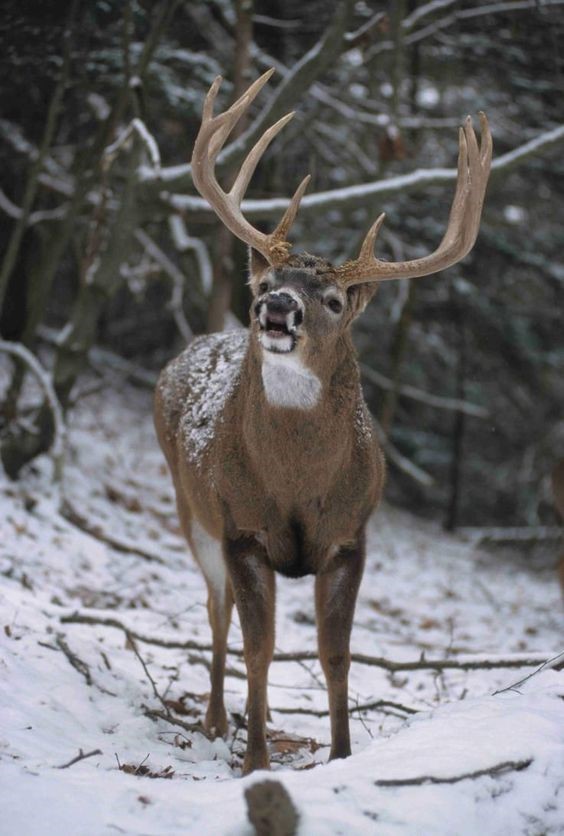
The Gun Deer Season Is Here!
The 2025 gun deer season opens on Saturday, Nov. 22, and runs through Sunday, Nov. 30.
One more sleep! The 2025 gun deer season opens on Saturday, Nov. 22, and runs through Sunday, Nov. 30.
Similar to last year, this year’s gun deer season runs later in the month. Fewer deer may be on the move relative to years with earlier openers. Other factors could create better deer hunting conditions, such as colder temperatures and snow cover.
Deer Management Units Have Changed For 2025
Hunters should be aware of updates to some of the Deer Management Units (DMUs) for the 2025 deer season. DMUs in the Northern Forest Management Zones have been converted to habitat-based units, as opposed to county-based units. Review the map of the new DMUs to double-check you know which DMU you are hunting in. You can also see a breakdown of the season structure by county and DMU.
Please note that Forest Zone DMUs are now referred to by a number. Hunters will need to know their DMU name or number when requesting antlerless permits.
Register Your Harvest
All harvested deer must be registered electronically by 5 p.m. the day after the deer is recovered. Hunters will need the unique harvest authorization number associated with each permit. Proper registration provides accurate harvest data for DNR wildlife managers and County Deer Advisory Councils for the management of Wisconsin’s deer herd.
The three options to register a deer are:
- By phone at 1-844-426-3734
- Electronically at a participating in-person registration station
Know Your Target
Elk sometimes move outside of the elk management zones, especially during the fall breeding season, so hunters are reminded to properly identify their target. Any elk taken without a tag may result in a fine and a revocation of your hunting license.
Although many hunters can tell the difference, it doesn’t hurt to freshen up your skills before you hunt. Use this comparison guide to test yourself on the differences between elk and white-tailed deer.
Hunt Safely
Virtually all hunting incidents can be attributed to a violation of one or more of the four basic rules of firearm safety, commonly known as TAB-K:
T – Treat every firearm as if it is loaded.
A – Always point the muzzle in a safe direction.
B – Be certain of your target, what’s before and beyond it.
K – Keep your finger outside the trigger guard until ready to shoot.
In addition to TAB-K, hunters must follow all hunting regulations and only take aim during legal shooting hours.
Additionally, anyone born on or after Jan. 1, 1973, must have a hunter education certification to purchase a hunting license unless hunting under the Mentored Hunting Law. Learn more about safe hunting in Wisconsin and register to take a hunter education course on the DNR’s Firearm Safety webpage.
Blaze Orange And Fluorescent Pink Required; Recommended For Non-Hunters
Hunters are also reminded of the blaze orange or fluorescent pink requirement that applies during any open statewide firearm season, such as the annual 9-day statewide gun deer season from Nov. 22 through Nov. 30.
Hunters must be wearing at least 50% blaze orange or fluorescent pink from the waist up. Any hats or hoodies worn must also be at least 50% blaze orange or fluorescent pink.
The DNR also encourages the non-hunting public and their pets to wear blaze orange or fluorescent pink during the gun deer season if they plan to recreate on public lands open to hunting.
Tree Stand Safety
Hunters using a tree stand or any elevated device should check their stands for wear and tear. This goes for the tree where the stand will be set. Check to ensure the tree can support the stand and the person.
To avoid accidents and ensure a safe outing, always be mindful of the basic rules of tree stand safety before and during every hunt:
- Always use a full body harness.
- Always use three points of contact when climbing into or down from the tree stand.
- Always use a haul line to raise and lower unloaded weapons.
- Use a lifeline to stay connected from the time you leave the ground until the time you climb down.
- Let someone who is not hunting know your plan, including your location and estimated return time.
- Carry a charged cell phone.
To review these tips and take a free tree stand safety course, visit the DNR’s Outdoor Skills webpage.
Mobile-Friendly Hunter Resources
The DNR’s Online Deer Camp is a one-stop shop for everything a hunter needs to know before heading out this season. It contains helpful links and information regarding purchasing a license, regulations, shooting hours, public land maps and more.
Help Fellow Wisconsinites Experiencing
Food Insecurity
Want to make a difference this fall? Consider donating a Wisconsin-harvested deer through the DNR’s Deer Donation Program to help fight hunger across Wisconsin.
Food insecurity impacts families across all 72 counties, and with winter coming and grocery prices remaining high, the need is as great as ever. More than 700,000 Wisconsin residents (about 12% of the state’s population) received food assistance in 2024, and community pantries all over Wisconsin are seeing an increased need for food, especially for nutrition-packed options like venison provided through the Deer Donation Program.
The Deer Donation Program, which began in 2000, helps stock food pantries and supports residents in need throughout the state. Since then, hunters have donated more than 4 million pounds of ground venison (that’s more than 100,000 deer), to help combat hunger in Wisconsin.
Donating a deer is easy, free and provides a nutritious, hearty meal for our neighbors in need.
Wisconsin has a network of venison donation partners, including county land and water conservation departments, food pantries, charitable organizations, USDA-Wildlife Services and participating meat processors, who all help implement and administer the program.
Hunters can donate the entire deer free of charge and retain the head and antlers for mounting if desired. When dropping your deer off at a processor, you will be asked to complete the log sheet indicating your intent to donate the deer. We’ll do the rest. The donated deer will be processed, and the venison will be distributed to charitable organizations to help feed those Wisconsinites in need of food assistance.
Hunters and non-hunters may also support the Deer Donation Program through a monetary donation in person at any Wisconsin hunting license sales location or online through their Go Wild account.
Visit Wisconsin’s Deer Donation Program webpage to learn more about the program.
Tips To Prevent Thanksgiving Food Waste
A new analysis by food waste-focused nonprofit ReFED estimates that across America, 320 million pounds of food will be wasted this Thanksgiving, representing $550 million worth of food thrown away in just a single day. Make the most of your holiday meal (and your money) with these simple tips in mind to prevent food waste this Thanksgiving.
- Prepare for parties and shop with a plan. Start with a headcount and create a list of the quantities of each ingredient needed using a free online dinner party planner such as the Guest-Imator. The calculator will help determine the amount of food you need to prepare. Create a menu that accommodates dietary restrictions rather than making extra alternatives.
- Upcycle your pantry. Allow your abundance of Community Supported Agriculture (CSA) subscription garden goods, grocery store sale items or properly stored food you already have at home to help inspire your Thanksgiving side dishes by using a recipe generator such as Cook It. Simply enter your ingredients (one or many), and it will generate recipes to help you use them all.
- Try cooking less turkey. As an alternative to roasting a whole turkey, especially if you have a small group, consider purchasing just your favorite cuts. Explore new recipes and cooking methods for these smaller quantities.
- Give the gift of food. No matter how much we plan, there is bound to be leftovers, and that’s OK. Spread the leftover love by having containers on hand to send guests home with their favorites. Find recipes online to creatively repurpose turkey, stuffing and other leftovers. If you find yourself with extra nonperishable items, such as canned goods or dried pasta, that you won’t use, consider donating them to a food bank organization or food pantry.
- Refrigerate quickly, freeze liberally. Consider popping your holiday leftovers and surplus ingredients in the freezer before it’s too late. Don’t let leftovers linger in the danger zone of 40-160 degrees Fahrenheit (4-60 degrees Celsius) where bacteria can grow rapidly, making food unsafe to eat. Store It on SaveTheFood.com gives advice for storing food and even tells us if it can be frozen. Have one too many cheese and sausage platters leftover from your holiday party? Pack it up airtight – freeze it and enjoy later this winter!
- Consider composting extra food scraps. Composting is a form of recycling because the organic materials are broken down into a useful garden product. The compost microbes live in the presence of air and produce less methane gas than if the food was in the landfill – plus you end up creating a great soil builder.
Find more food waste prevention and recycling tips, including more handy food calculators and recipe generators, at our DNR Reducing Food Waste at Home webpage.
Photo Credit: iStock/Jeff Couch |
Keep An Eye Out For Black Bear Dens While Hunting
The Wisconsin Department of Natural Resources (DNR) is asking hunters heading out for the state’s nine-day gun deer season to report any black bear den locations they may find.
Den reports from the public are critical for an ongoing study on black bear reproduction that will contribute to new population estimates within each of the state’s bear management zones and inform key management decisions.
The Black Bear Litter and Diet Survey research team will accept a den report anywhere in the state. However, the team is particularly interested in finding dens in bear management zones C, E and F, or roughly south of State Highway 64. Reporting dens helps the DNR meet the sample size requirements for our study and will increase the accuracy of the black bear population estimate.
If you believe you have found a black bear den, please collect the following information quickly and quietly while remaining a safe distance of at least 30 yards from the den at all times:
- GPS coordinates: You can use a mobile phone’s pre-installed map app, such as Google Maps or Apple Maps. For best results, first go to your phone’s Settings and turn on the option to improve location accuracy.
- Photos of the den: Maintaining a safe distance, take an image or two showing the den in relation to its surroundings.
- Description of the site and surrounding area: Take some notes on the size of the entrance, the direction it faces and whether there are notable landmarks nearby.
- Description of any bear activity in general area: Make a note of anything you observe, including pawprints, scat or fresh scratch.
Before the team surveys a den, they will work with the den reporters and landowners to determine whether it is safe, accessible and in use. Den reporters, landowners and/or land managers are typically invited to help if there is a planned survey for the reported den. The team may not be able to visit every reported den location this season; they will prioritize dens that are confirmed to be occupied.
Thank you in advance for your help with this critical research!
To report a known black bear den, visit the DNR’s black bear den submission form. |
|