2026 Bonus Antlerless Deer Harvest Authorizations Available For Purchase Aug. 17
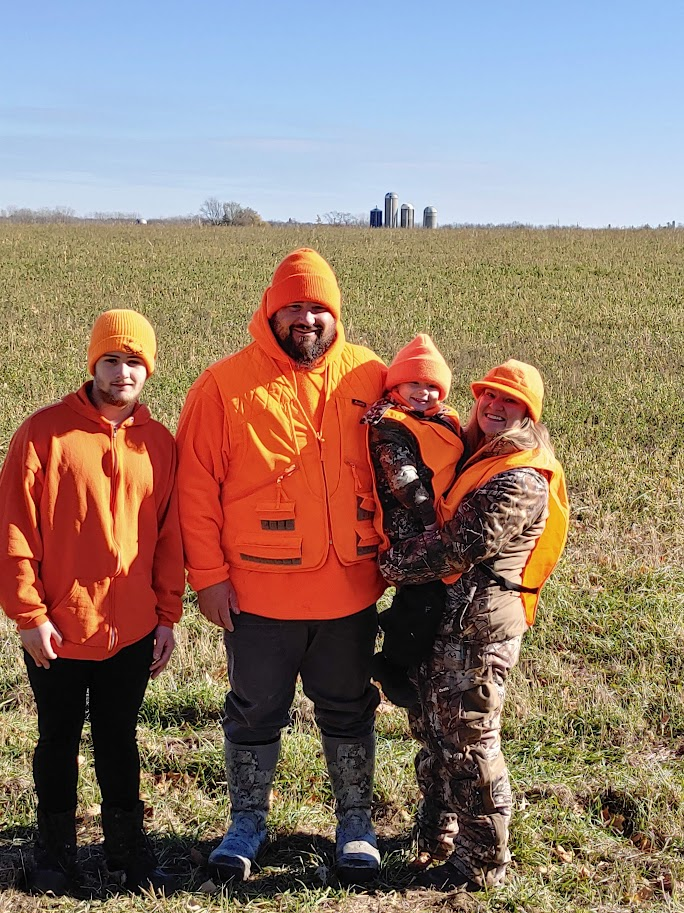
The number of antlerless harvest opportunities will vary by deer management unit in accordance with local deer population levels.
Attention deer hunters! Bonus antlerless harvest authorizations for the 2026 gun deer season will be available for purchase online through Go Wild and at license sales locations starting at 10 a.m. on Monday, Aug. 17, 2026.
An online queuing system will be used to manage volume in Go Wild. All users entering the site between 9:45 a.m. and 10 a.m. will be randomly assigned a number and staged in a virtual queue. Users will be arranged randomly regardless of the actual time they enter the system. There is no advantage for customers who enter the site before 9:45 a.m. Users who log on after 10 a.m. will be added to the end of the existing queue in the order of arrival.
To complete their purchase, hunters will need to know the deer management zone and unit in which they intend to hunt, determine whether they will hunt on public or private land and have a deer hunting license approval. Due to realignment of the Northern and Central Forest Zones, there were changes made to some deer management unit borders in 2025. The DNR encourages hunters to consult the Deer Season Structure And Management Zone maps before buying their licenses.
The first three days of bonus sales are management zone-specific, and the fourth day is open to all zones:
- Aug. 17, 10 a.m. – Forest Zones (Northern and Central)
- Aug. 18, 10 a.m. – Central Farmland Zone
- Aug. 19, 10 a.m. – Southern Farmland Zone
- Aug. 20, 10 a.m. – All zones available
Bonus authorizations are sold at a rate of one per person per day until sold out or until the 2026 deer hunting season ends. Bonus authorizations are $12 each for Wisconsin residents, $20 each for nonresidents and $5 each for youth ages 11 and under.
The number of antlerless harvest opportunities will vary by deer management unit in accordance with local deer population levels. This allows for greater harvest opportunities where deer are abundant and a more conservative harvest where deer are fewer in number.
A listing of bonus antlerless harvest authorizations available for purchase in each deer management unit can be found on the DNR’s Antlerless Deer Harvest Authorization webpage.
A minimum of one Farmland Zone antlerless harvest authorization is included with each deer hunting license purchase in all Farmland Zone units. Some units will offer more than one antlerless deer harvest authorization with each deer license.
As a reminder, beginning in 2026, all users who have already established a username and password will now be required to use these credentials for login. For those who haven’t yet created a username and password, you can still access your account using personal information, but you will be prompted to complete the username and password setup and security questions.
If you have not yet created a Go Wild username and password, these steps walk you through the process. If you forget your username or password, convenient self-help recovery options are available by clicking “Forgot Username” or “Forgot Password.” To ensure a smooth login experience, please verify that the email address on file in your Go Wild account is up to date, as recovery options for forgotten usernames and passwords are linked to this email.
For more information on deer hunting in Wisconsin, visit the DNR’s Deer Hunting webpage.
ATV/UTV Riders: Wear Helmets, Use Seatbelts
Wisconsin Department of Natural Resources (DNR) statistics show the lack of wearing helmets and using seatbelts are the primary causes of the 29 fatal ATV/UTV incidents so far in 2026. Wisconsin leads the nation in fatal ATV/UTV incidents.
A third major factor in fatal crashes is the lack of completing a safety education course. Completing safety education and utilizing helmets and seatbelts are simple ways to protect yourself and passengers while out riding. Not all crashes are 100% preventable, but the odds of surviving a crash drastically increase when safety equipment is properly worn.
DNR records show 13 of the 29 fatal incidents in 2026 involved ATVs and 16 involved UTVs. The top three types of fatal crashes were rollovers (15), collision with a motor vehicle (6) and ejections from the machine (4).
There also have been 49 self-reported nonfatal ATV/UTV crashes.
Keep these safety tips in mind:
- Always ride sober, with zero alcohol or substances.
- Wear helmets, seatbelts and eye protection even when loading and unloading machines.
- Follow all regulatory signs, speed limits and come to a complete stop at all stop signs.
- While on routes, operate with lights on, on extreme right-hand side of the traffic lane and at safe speeds.
- Take a safety class regardless of age requirements.
Wisconsin law requires every operator involved in a crash incident to report the incident without delay to law enforcement officials. In addition, within 10 days of the incident, the operator must submit a written report on Form 4100-174 to the DNR.
Learn more about ATV/UTV riding, regulations and safety classes on the DNR website. |
Back To School!
Get ready for the new school year and support conservation and environmental education and outreach initiatives by purchasing DNR merch for your kids.
The Flora & Fauna of Wisconsin Youth Tee features a vintage-inspired pattern depicting some of the state’s most iconic native plants and animals: the badger (Wisconsin’s State Animal), the robin (Wisconsin’s State Bird), the wood violet (Wisconsin’s State Flower), the cranberry (Wisconsin’s State Fruit), the rusty patched bumble bee (a beloved native bee species), the white-tailed deer (Wisconsin’s Official Wildlife Animal), the muskellunge (Wisconsin’s State Fish) and the sugar maple (Wisconsin’s State Tree).
Or help spread Smokey Bear share important info about wildfire prevention with our Smokey Bear Youth Tee. Proceeds also support the National Fire Prevention Program.
Free shipping is available on all orders over $75. All online orders are shipped within 2-5 business days.
Sign up for DNR email alerts to receive communications about new items and promotions as they become available. |
Avoid Ash Trees When Placing Deer Stands
As the deer season draws nearer, hunters are reminded to avoid placing deer stands in or near ash trees as they start scouting properties ahead of the coming deer hunting season.
Most ash trees in the southern two-thirds of Wisconsin are dead or dying due to the emerald ash borer, and infestations in the northern part of the state are rapidly expanding. Emerald ash borer has been confirmed in all 72 Wisconsin counties, and unreported infestations are also likely to be present.
It is important to place and maintain tree stands carefully, as trees infested with emerald ash borer may unexpectedly snap or drop large branches. Hunters should also be cautious around ash trees when on the ground, especially in windy conditions, as infested trees are susceptible to branch and stem breakage.
Research shows that one in four bowhunters has experienced a fall or near-fall from an elevated stand. Hunters can help keep themselves safe by following some basic rules and best practices, regardless of the type of tree selected.
Basic Rules Of Tree Stand Safety
No matter the type of tree stand, basic safety rules should always be observed:
- Always wear a full-body harness (also known as a fall-arrest system). Connect to your tether line and keep that line short. The tether is designed to keep the hunter in their seat, not to catch them after they fall.
- Always have three points of contact while climbing into and out of the tree stand, whether it’s two hands and one foot, or two feet and one hand.
- Always use a haul line to raise and lower an unloaded firearm or bow into and out of the stand. The haul line can also be used to haul other things, such as a heavy backpack.
- Use a lifeline when climbing up and down, being sure to remain connected from the time you leave the ground to the time you put your feet on the ground.
The DNR offers a webpage with additional tree stand safety information, including a brief tree stand safety course.
How To Identify Ash Trees
Ash trees can be identified by looking for two key features:
- Opposite branching patterns, with two branches coming off the main stem directly across from one another.
- Compound leaves with 5-11 leaflets.
More information on ash trees and how to identify them is available on the University of Wisconsin-Madison Department of Entomology’s Emerald Ash Borer webpage.
Avoid Spreading Forest Pests And Diseases
When traveling for hunting season, obtain firewood close to where it will be burned to reduce the chance of spreading tree-killing insects and diseases such as emerald ash borer, spongy moth and oak wilt.
Dry firewood with loose bark has the lowest risk of spreading harmful insects or diseases. Purchasing certified firewood is another option, as it is widely available and is seasoned or treated to eliminate pests and diseases. Bundles of certified firewood have a printed label showing certification.
More information about emerald ash borer, signs and symptoms of infestation and where this pest has been found is available on the DNR’s Emerald Ash Borer webpage. |
|