Be Thankful for November
In The Marsh and Beyond
|
|
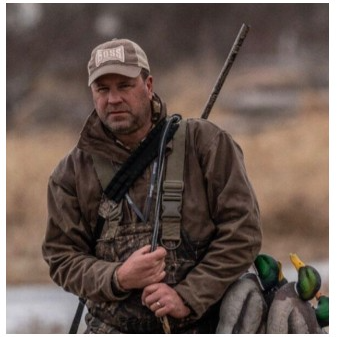
| Brad Heidel
WWA: Executive Director |
| I’ll keep this note short and sweet.
As a Wisconsin hunter, I know November is prime time for just about everything but teal! Northern birds are making their way south through our state. The whitetail rut, as I write this, is ramping up, and in just a few weeks, the orange army will hit the woods for our traditional nine-day gun deer season. It’s a pretty great time of year to live in our great state!
November is also the month of one of my favorite holidays -Thanksgiving. And we have a lot to be thankful for. It’s a time to gather with friends and family, enjoy a great meal, and reflect on all we have to be thankful for.
Organizationally, I’m thankful for your membership and support of this great organization that does so much for Wisconsin Ducks and Wisconsin Duck Hunters. I’m also very thankful for our staff and volunteers, whom I can always count on to go above and beyond to help us accomplish great things.
Hey – take the time to get out and enjoy your Wisconsin November. It has so much to offer!
See you in the marsh, |
|
Wisconsin Election Results Bring New Dynamic for Conservation
|
| By George Ermert:
WWA Board Member and Policy Committee Chair |
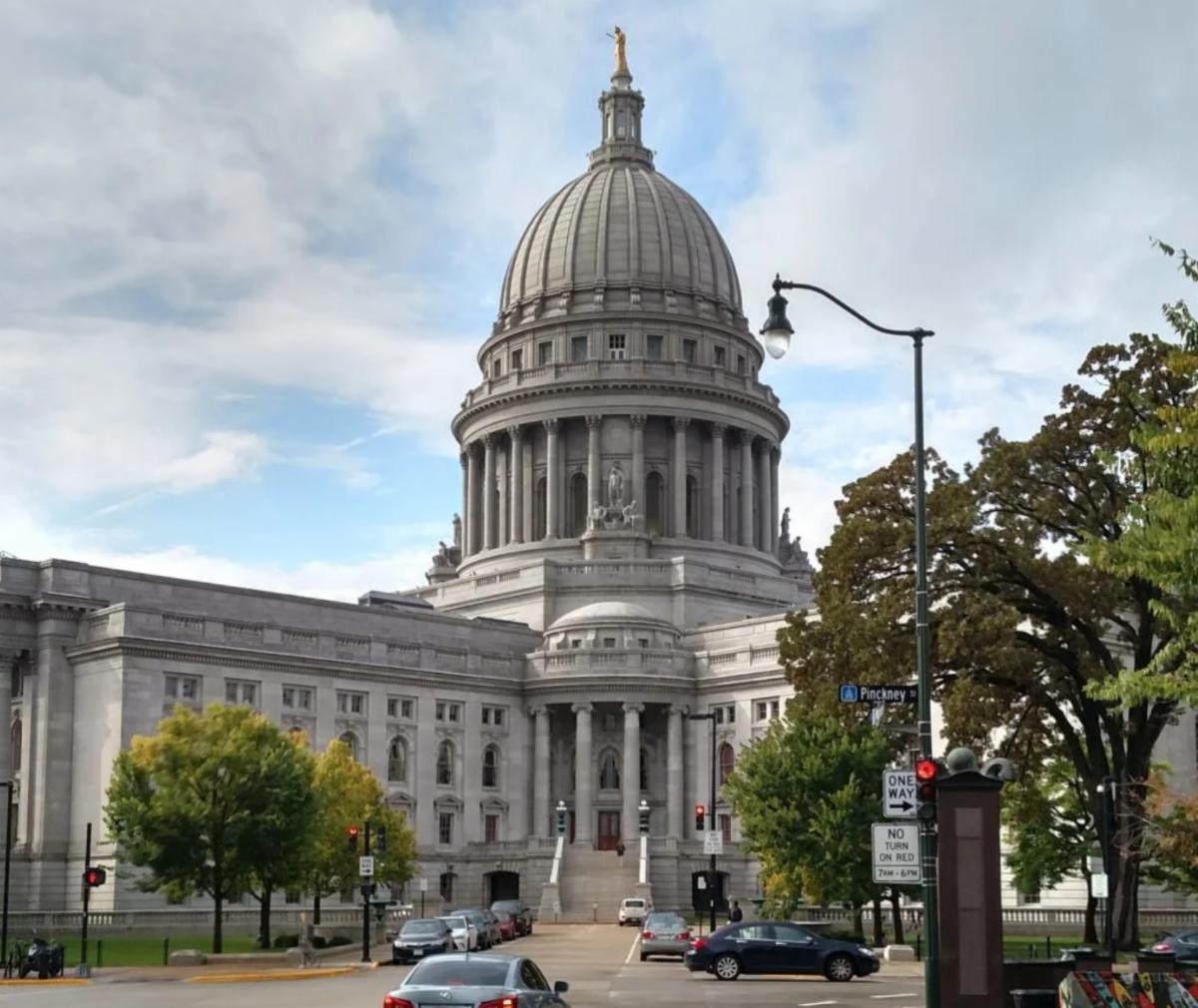
| The results of Wisconsin’s 2026 elections will bring a new dynamic to conservation policy in our state. Voters elected David Crowley as Wisconsin’s next governor while also giving Democrats majorities in both the Wisconsin State Senate and State Assembly. The election marks the first time in more than 16 years that a single party will control both legislative chambers and the governor’s office, creating a new governing environment for issues affecting wildlife, wetlands, outdoor recreation, and natural resources.
For members of the Wisconsin Waterfowl Association, the most important question is not who won the election, but what the results may mean for the future of conservation. While no election outcome guarantees specific policy decisions, unified control of state government often makes it easier to advance legislative priorities. Conservation issues that could receive increased attention in the coming years include wetland restoration, water quality improvements, habitat enhancement, public land acquisition, outdoor recreation funding, and continued support for state conservation programs.
One area that will be closely watched is the future of the Knowles-Nelson Stewardship Program, Wisconsin’s flagship conservation funding program. |
|
More Than a Hunt: Four Years of Empowering Women Through Waterfowl Hunting
|
|
| Written By:
Alexandra Smart
Co-Coordinator, For Women By Women Waterfowlers Academy
Wisconsin Waterfowl Association |
|
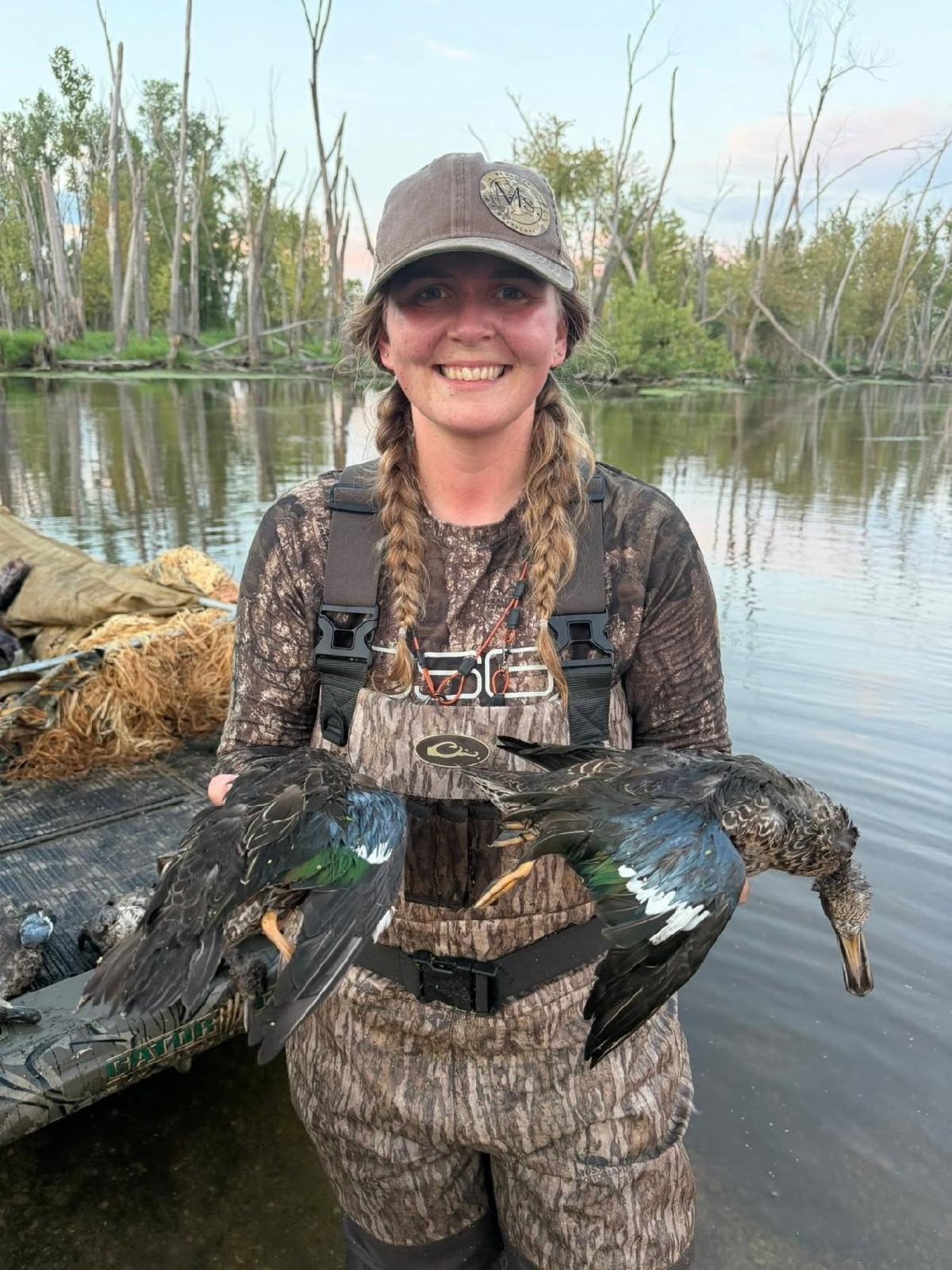
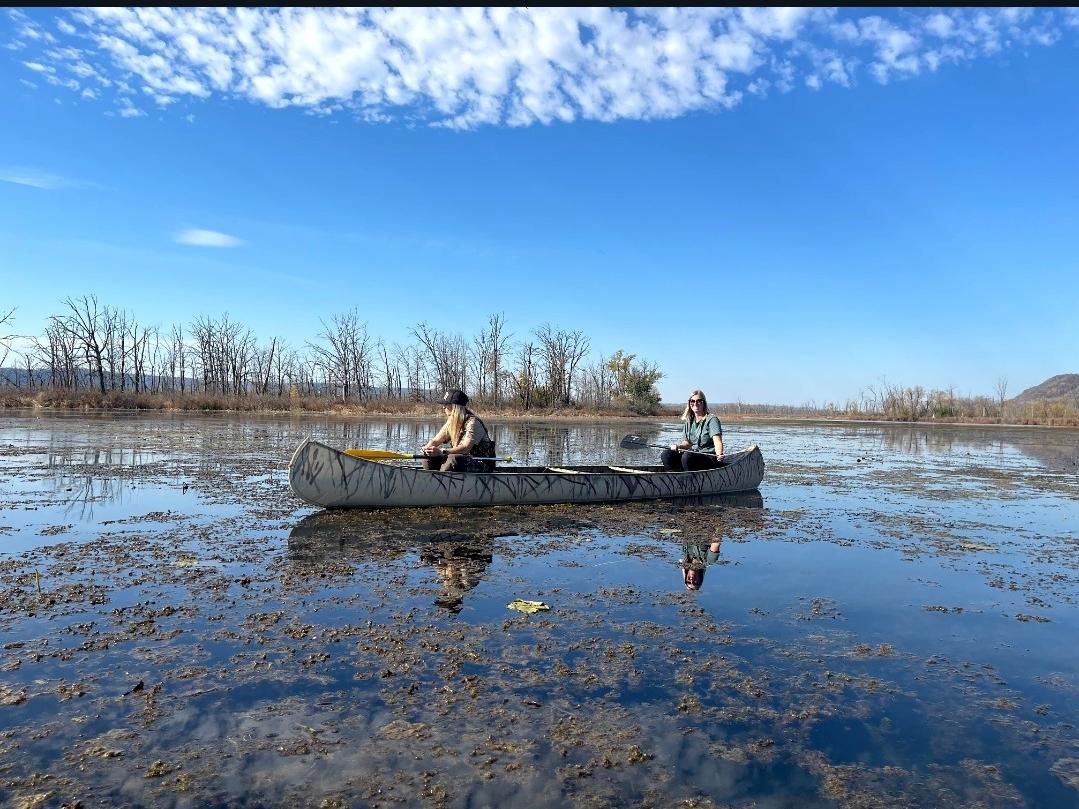
| Celebrating the 4th Annual For Women By Women Waterfowlers Academy with the Wisconsin Waterfowl Association
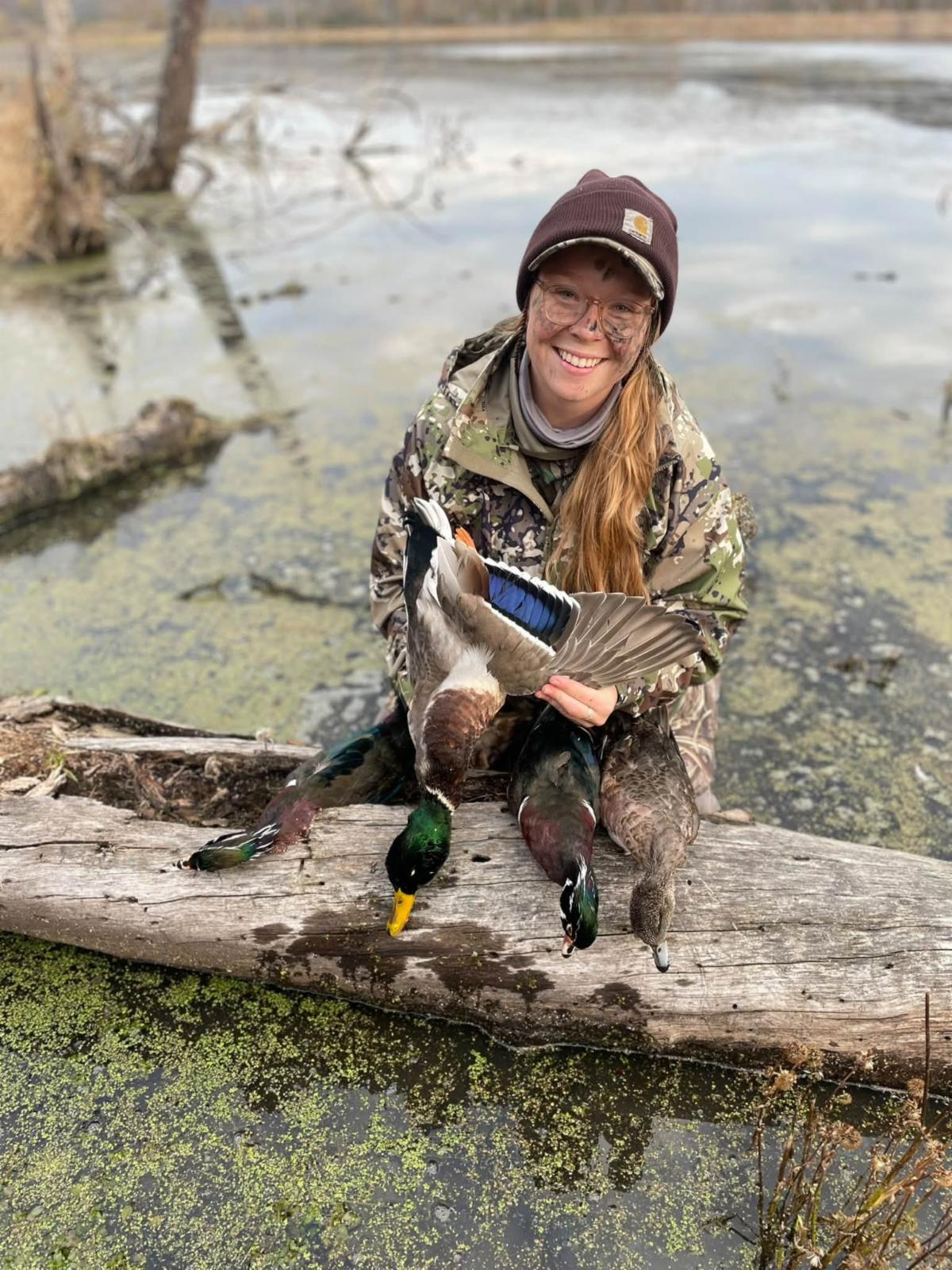
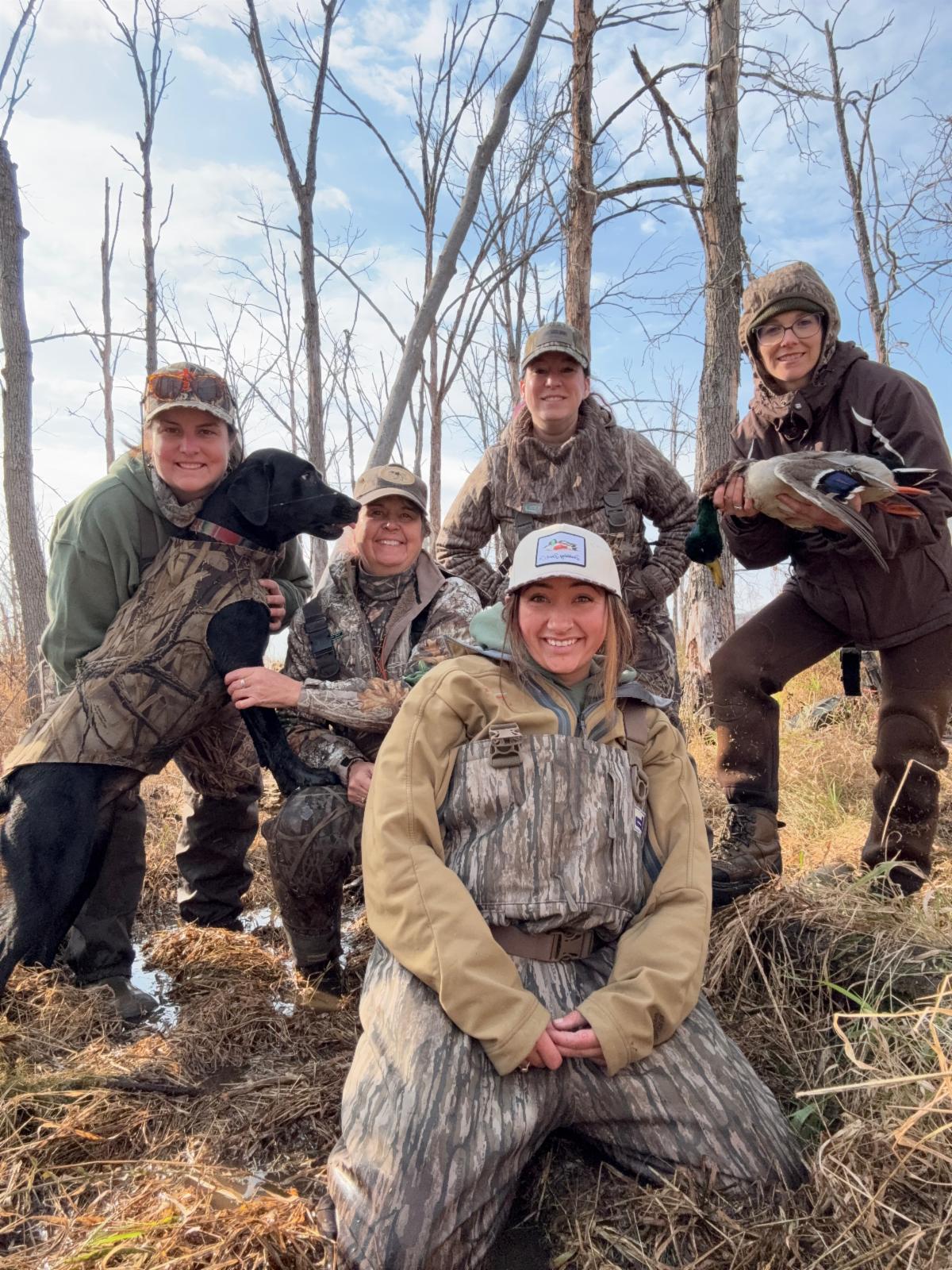
There is something incredibly special about watching a woman step outside her comfort zone, pick up a shotgun, climb into a duck boat, or experience the stillness of a marsh for the very first time.
It’s even more special when you get to be part of the reason she had that opportunity.
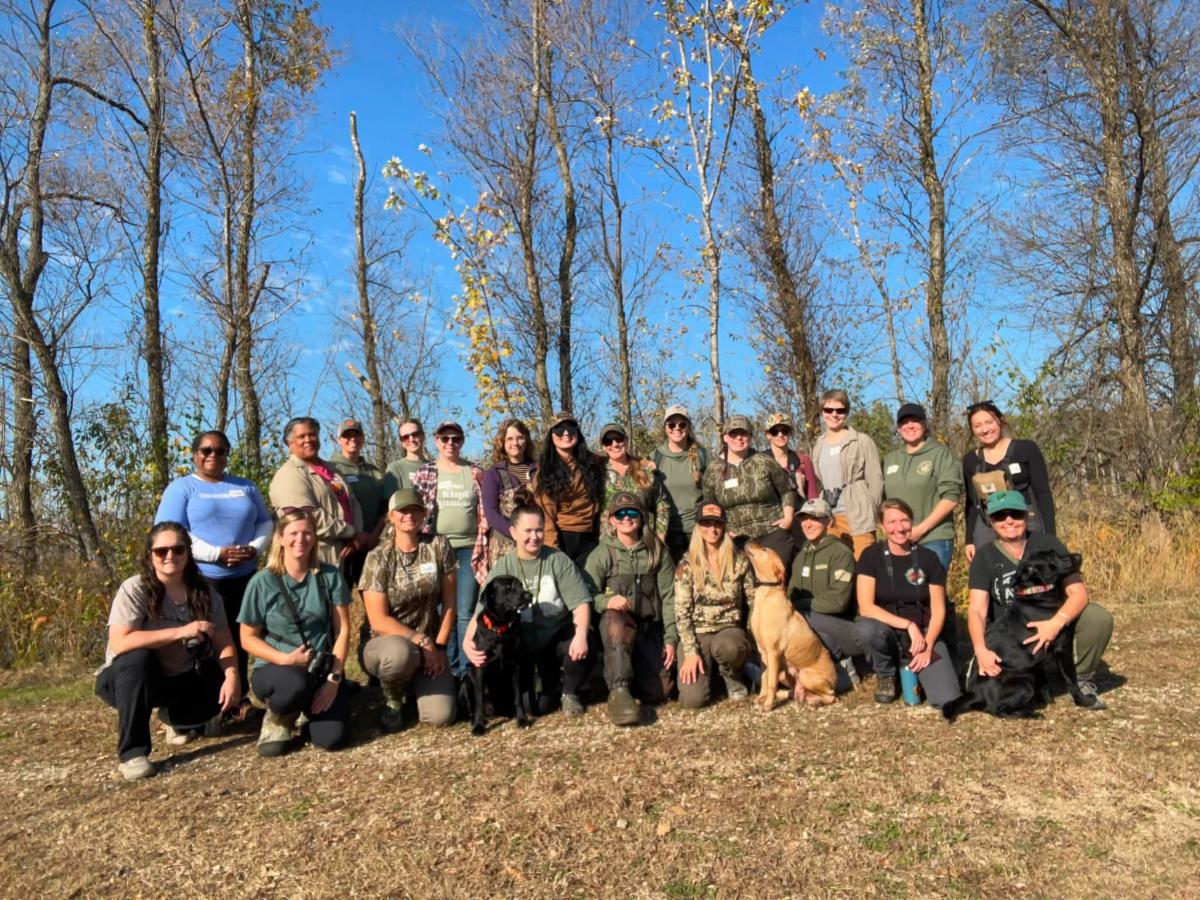
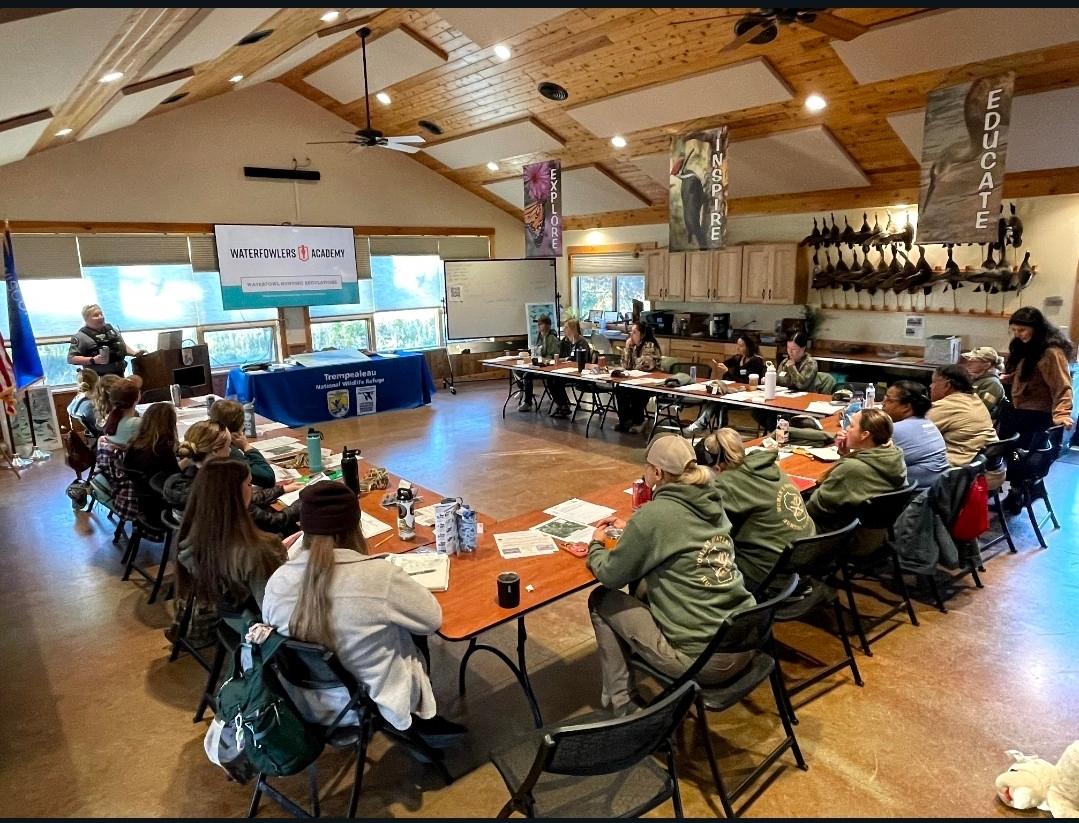
This October marks the fourth year of the For Women By Women Waterfowlers Academy, proudly held in partnership with the Wisconsin Waterfowl Association (WWA) at the Trempealeau National Wildlife Refuge.
What began as an opportunity to introduce women to waterfowl hunting has grown into something far greater than any of us could have imagined. It has become a community of women who share their knowledge, encourage one another, and believe wholeheartedly that the future of hunting depends on our willingness to welcome the next generation. |
|
| It’s knowing that somewhere down the road, one of these women may be sitting in a duck blind, introducing a daughter, sister, friend, or complete stranger to the very same experience someone once gave her.
That is what makes every late night, every difficult decision, every hour of preparation, and every sacrifice worthwhile.
To the incredible women who have mentored, volunteered, taught, organized, and poured their hearts into this academy, thank you. Your dedication has made a difference in ways you may never fully see.
To the Wisconsin Waterfowl Association, our partners, supporters, and everyone who has helped make these opportunities possible, thank you for believing in the importance of bringing new women into the outdoors.
And to the women who have trusted us enough to take that first step, thank you for reminding us why we do this.
Because at the end of the day, we aren’t simply teaching women how to hunt.
We’re giving them the opportunity to discover what they’re capable of, creating memories that will outlast the season, and passing along something we love to someone who may carry it further than we ever could.
And if there’s one thing that planning learn to hunts have taught all of us, it’s this:
You may not get the same opportunity twice in life. But if you’re fortunate enough to have one that allows you to change someone else’s life, give it everything you’ve got. |
|
| For me, the greatest reward has never been the number of women who attend, the number of birds harvested, or even the success of the event itself.
It’s the women.
It’s watching their confidence grow.
It’s seeing them discover a passion they didn’t know they had. |
|
|
Celebrating 18 Years of Partnership: WWA Honors Pittsfield Trap Association
|
|
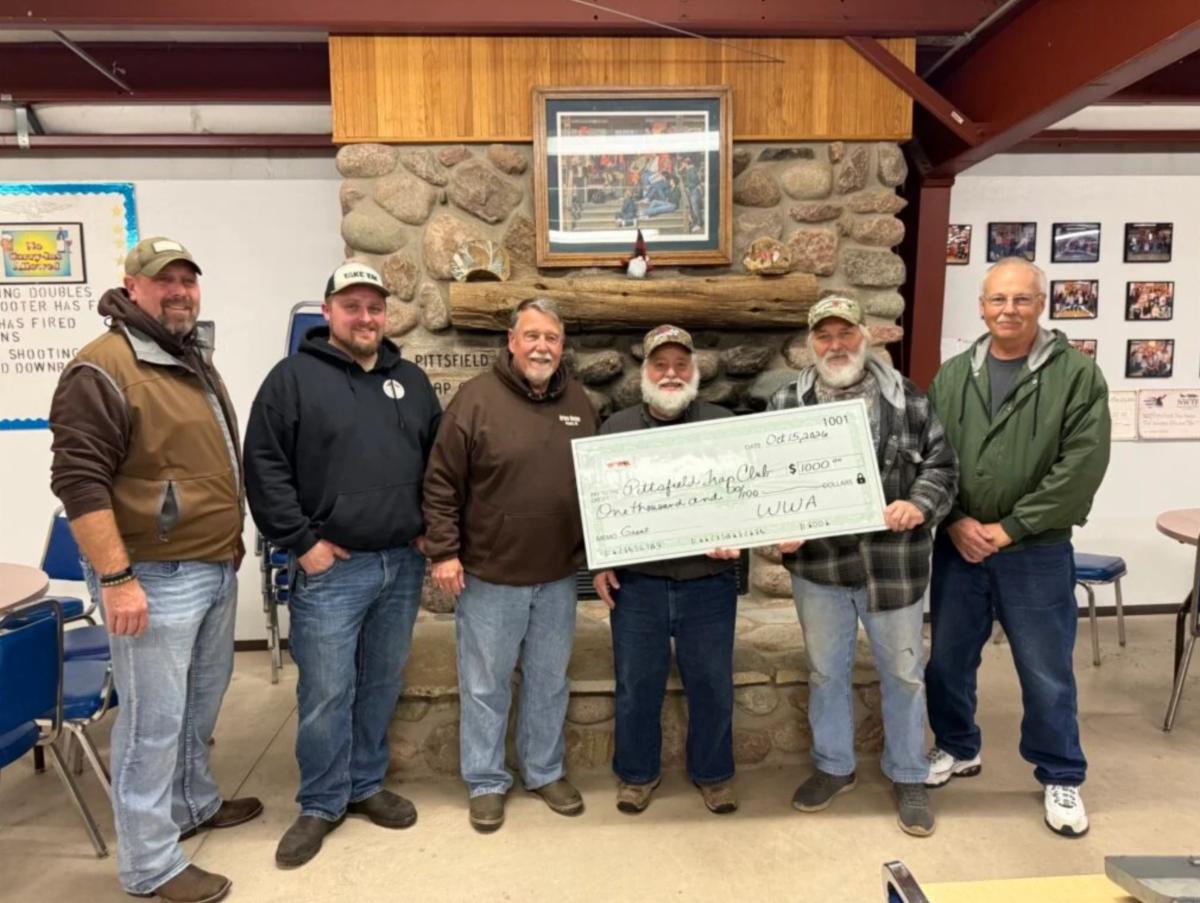
| Pictured above: Eric Urben, WWA Green Bay Chapter chair; Hank Voekes, Chapter Board member; Bruce Urben, WWA President and Chapter member; and Pittsfield Trap Association officials, receiving a check from Jerry VanDeVort, John Martens, and Richard Hornick! |
|
| The Green Bay Chapter of the Wisconsin Waterfowl Association presented a check to Pittsfield Trap Association for their 18-year support of WWA’s first Learn to Hunt program.
Pittsfield Trap Asso. has allowed the Chapter to utilize their Club building, kitchen, grounds, and traps to hold their Learn to Hunt classes since 2008. All the facilities were provided at no charge.
GreenBay Chapter held the first Learn to Hunt Waterfowl program in the State and has continued it through 2025! Over 200 students (youth, young adults, and Adults) have gone through the program, and many have returned as mentors in subsequent years!
The GreenBay Chapter of WWA requested and received approval for a Chapter Internal Grant to present a check to Pittsfield Trap Association in appreciation of their support!
WWA could not run this program without Pittsfield’s support and facilities!
Pittsfield Trap Association officers responded: “We appreciate the partnership and the opportunities to work alongside WWA for the past 18 years through the Learn to Hunt program. We are proud of what we have accomplished and look forward to continuing this great tradition for many years to come.” |
|
DNR To Conduct Prescribed Burn Operations At Lakeshore State Park
|
|
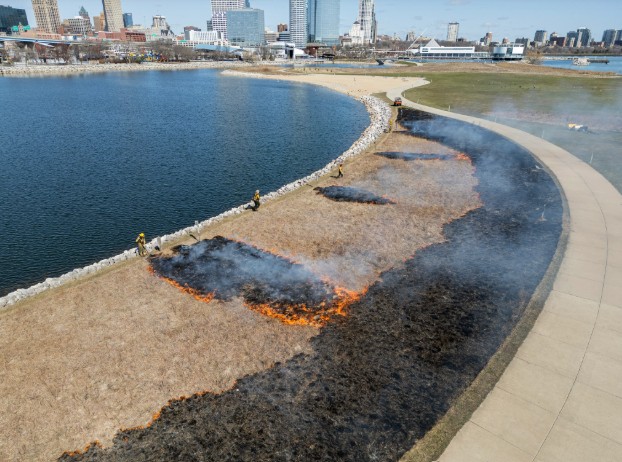
| Prescribed burns can help stimulate prairie grass growth and improve habitat.
Photo credit: Eddee Daniels |
|
| MILWAUKEE, Wis. – The Wisconsin Department of Natural Resources is conducting prescribed burning operations at Lakeshore State Park in Milwaukee County with an anticipated burn window of Sunday, Nov. 1 – Tuesday, Dec. 15, 2026.
The burn will require a property closure of Lakeshore State Park for a single day within this range and may be adjusted based on weather conditions. The exact date will be posted on the DNR’s Lakeshore State Park webpage and the Friends of Lakeshore State Park’s social media pages.
Prescribed burns support healthy ecosystems for an abundance of plants and animals in Wisconsin. Historically, periodic fire (either lightning or human-caused) would remove dead vegetation while stimulating native plant growth.
Following the burn, hazardous fuels are reduced, and foraging and nesting improve in the revitalized vegetation: the stimulated growth of their root systems enhances their ability to store more carbon. Other benefits of prescribed burns include reducing non-native or invasive plant species.
“Conducting a prescribed burn will enhance the prairie habitat treasured by a number of bird and insect species, along with reducing runoff with improved native prairie success,” said Elaine Zautke, Lakeshore State Park manager. “Following the burn, additional native seeding and plant installations will occur this summer, thanks to collaborative funding efforts.”
When conducting prescribed burns near roads or recreational trails, the DNR will post signs to notify the public. To ensure public safety, the DNR asks all members of the public to avoid these areas while the burn is being conducted. The DNR also notifies local law enforcement and fire officials in advance about when and where DNR prescribed burns will take place.
More information about DNR prescribed fire operations is available on the DNR’s Prescribed Fire webpage. To view historic burns and track the status of current and planned (24 hours in advance) burns on DNR lands, visit the DNR’s Prescribed Burn Dashboard. |
|
Youth Waterfowl Hunt Is a Valuable, Enjoyable Opportunity; Consider Lincoln County For Hunts
|
|
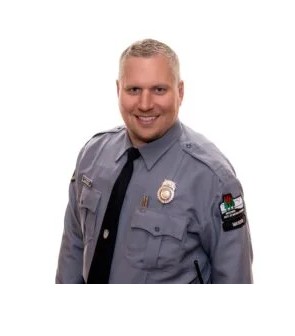
| By DNR Conservation Warden Joel Nuernberger |
|
| If any Wisconsin Waterfowl Association members are scouting for hunting areas that are new and perhaps not too far to drive with friends and families, I have an answer.
While you might think that’s stretching it a bit for a first-year Wisconsin Department of Natural Resources conservation warden stationed in Tomahawk, I can endorse Lincoln County as a prime hunting spot from two worlds – my warden squad and as a father who patrolled the Sept. 19-20 youth waterfowl hunt.
I was on duty for the youth waterfowl hunt, and it was encouraging to see hunters take advantage of the season. I had several contacts with fathers with their sons/daughters/friends. I enjoyed our conversations about their hunting experiences, and I remember one father who let his daughter load the duck boat by herself because she wanted the full experience.
If they were lucky enough to harvest some ducks, the young hunters were always eager to show them off. It was clear to me they appreciated the opportunity to get in the field while doing it safely. Whether they harvested or not, everyone enjoyed a memory-filled event.
Here are some requirements for the youth waterfowl hunt: |
|
| Courtesy of
Connie Markham |
|
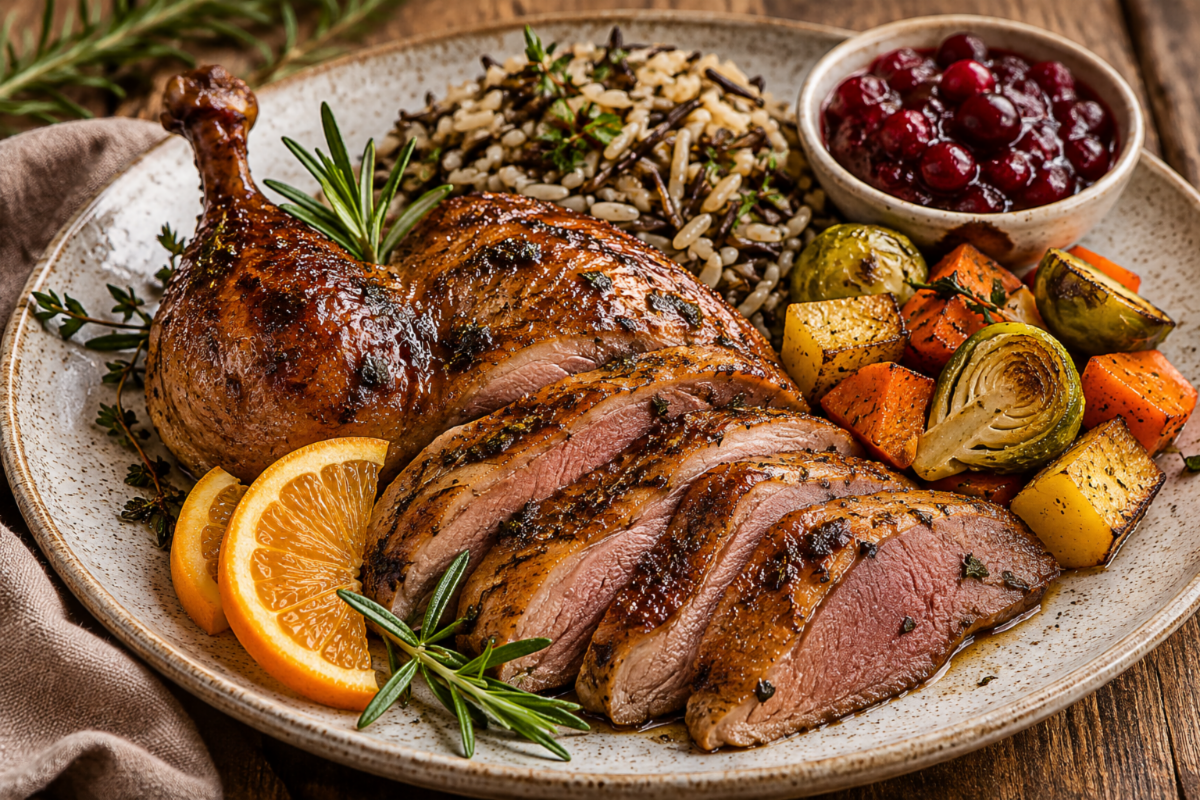
| Herb-Roasted Wild Mallard with Orange-Honey Glaze |
|
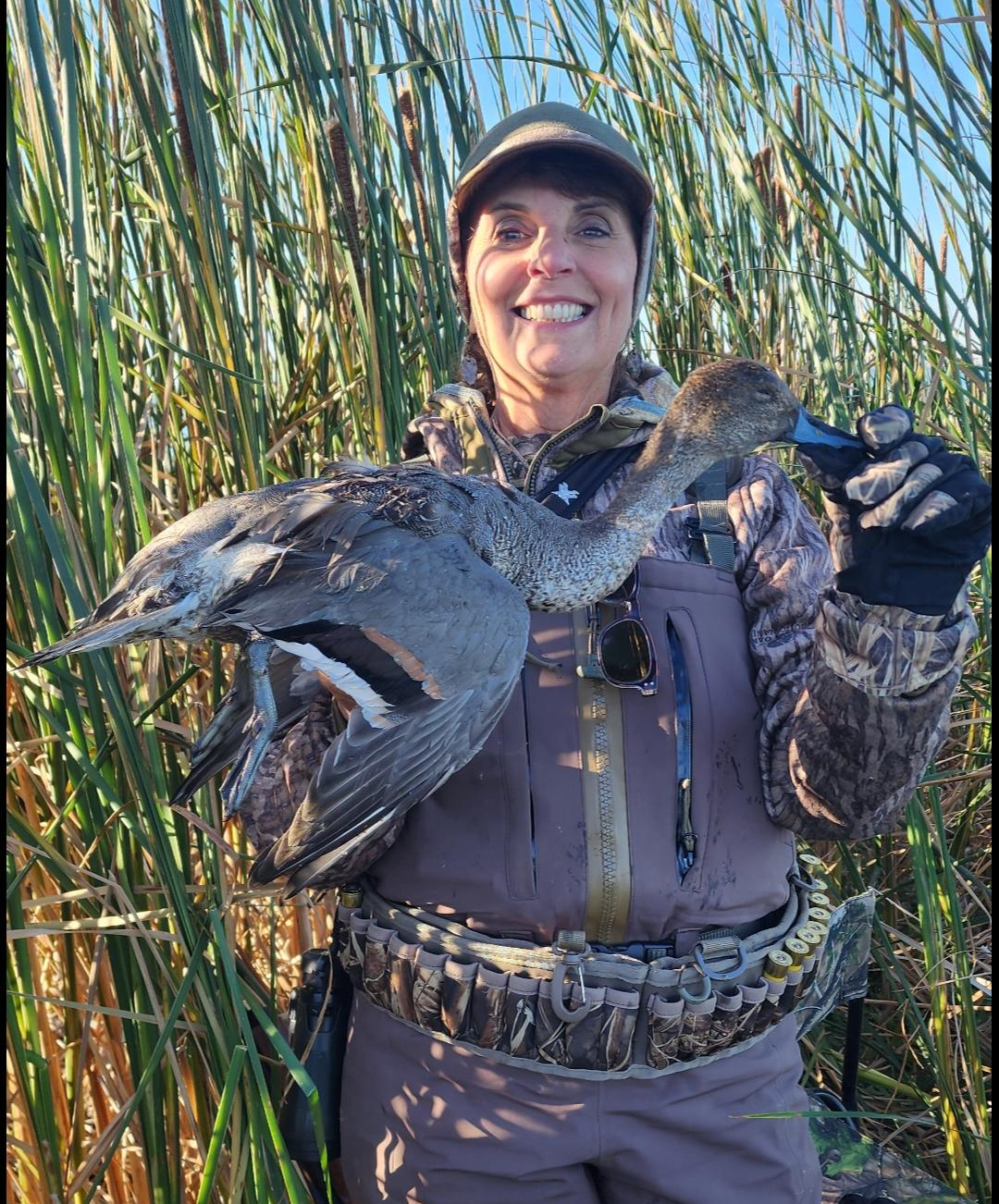
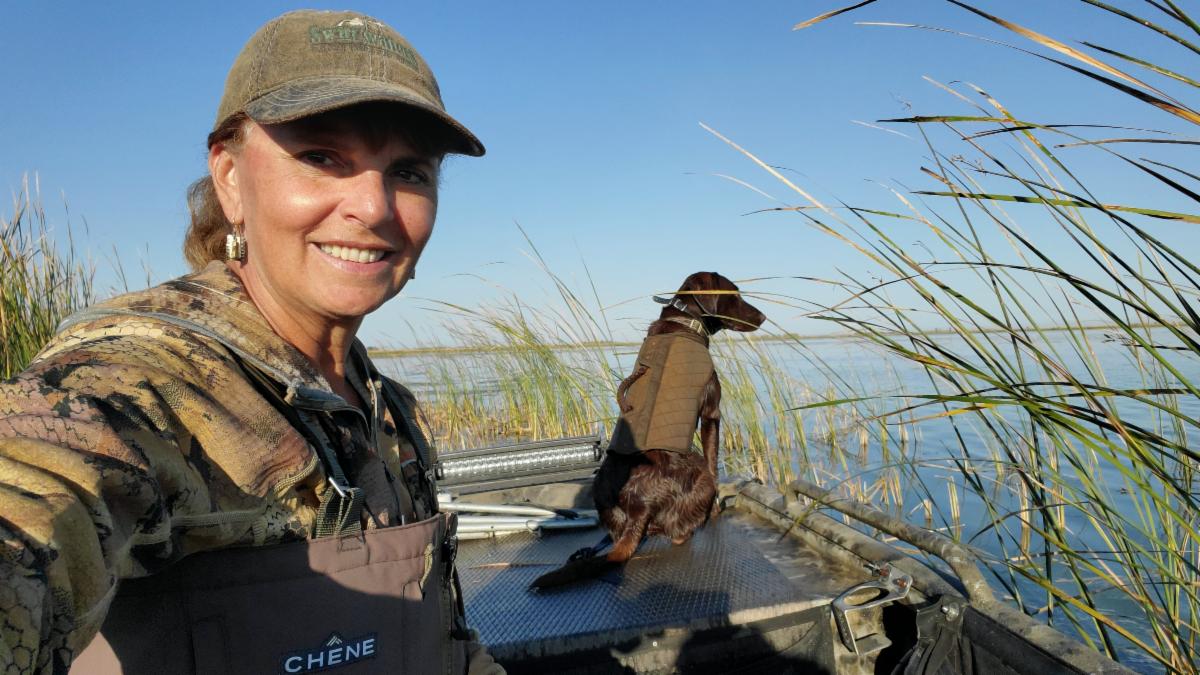
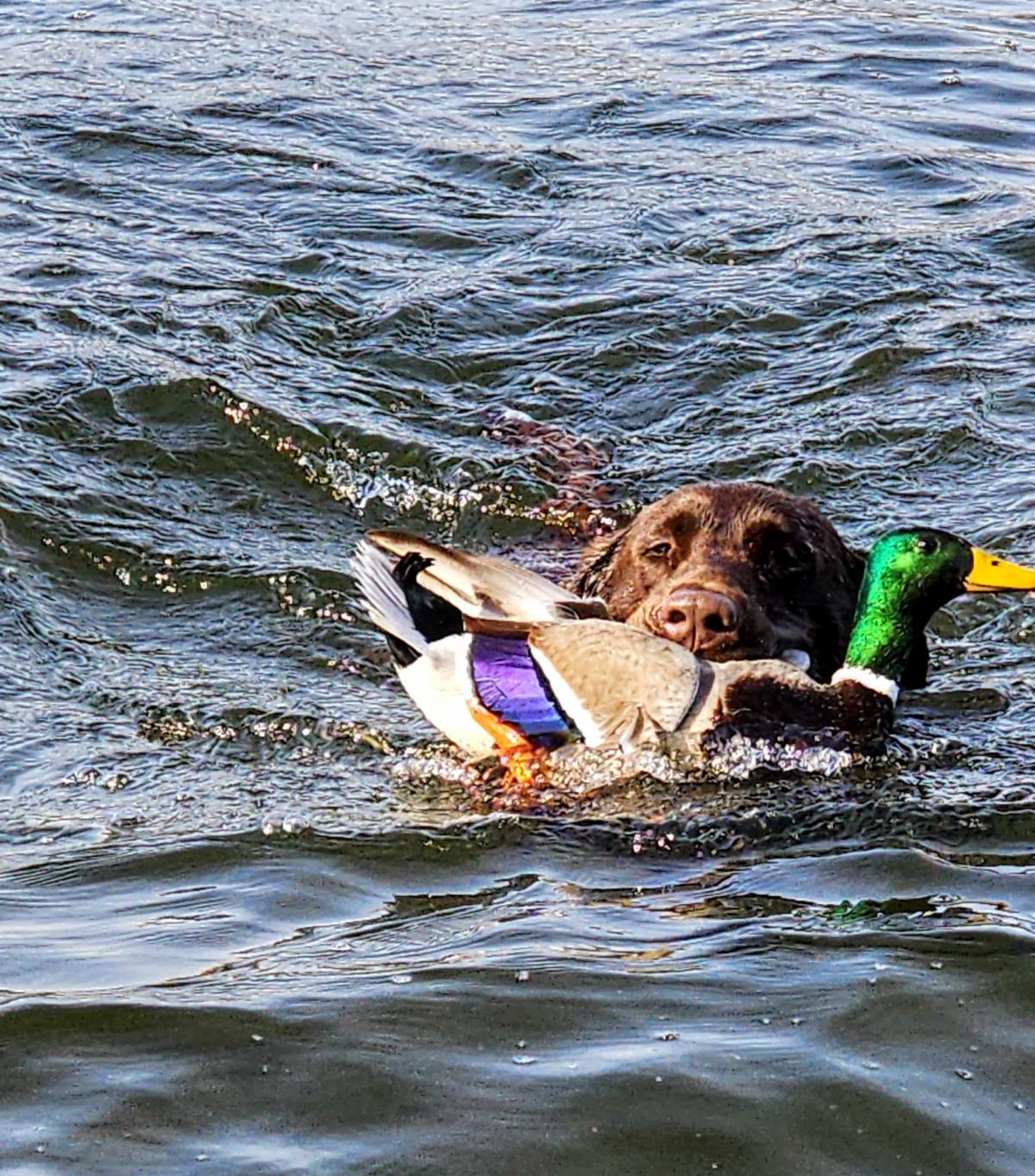
| There’s nothing quite like a successful day in the duck blind with my trusty hunting partner, Jade, by my side. As an avid duck hunter, I believe one of the best ways to celebrate the hunt is by turning a freshly harvested mallard into a delicious meal. This Herb-Roasted Wild Mallard with Orange-Honey Glaze, served with wild rice, seasonal roasted vegetables, and cranberry sauce, is the perfect combination of savory and sweet. It’s a wonderful way to bring the flavors of the fall harvest to your table.
Happy hunting and happy cooking!
Connie & Jade |
|
| Herb-Roasted Wild Mallard with Orange-Honey Glaze
Ingredients
For the duck
- 1 whole wild mallard, plucked and cleaned
- 2 tablespoons olive oil or melted butter
- 3 cloves garlic, minced
- 2 sprigs fresh rosemary
- 2 sprigs fresh thyme
- 1 orange, quartered
- 1 small onion, quartered
- 1 teaspoon kosher salt
- ½ teaspoon black pepper
- ½ teaspoon smoked paprika
|
|
For the orange-honey glaze
- ¼ cup fresh orange juice
- 2 tablespoons honey
- 1 tablespoon balsamic vinegar
- 1 tablespoon butter
- 1 teaspoon Dijon mustard
|
|
Instructions: Go to “Full Recipe”
|
|
| Bruce Urben,
WWA President |
|
Stiller Family of Decoy Carvers (August, William and Donald)-Green Bay, WI
|
|
| The Bay of Green Bay is a waterfowl stopover on the south migration each fall. Thousands of diver ducks and puddle ducks congregate there in preparation for their trek south. Market gunners and families trying to make ends meet during the Depression years hunted the Bay heavily beginning in the 1800’s. Trapping, fishing, and waterfowl hunting were staples back then. The Bay remains a “destination” for waterfowl hunters across the Midwest. |
|
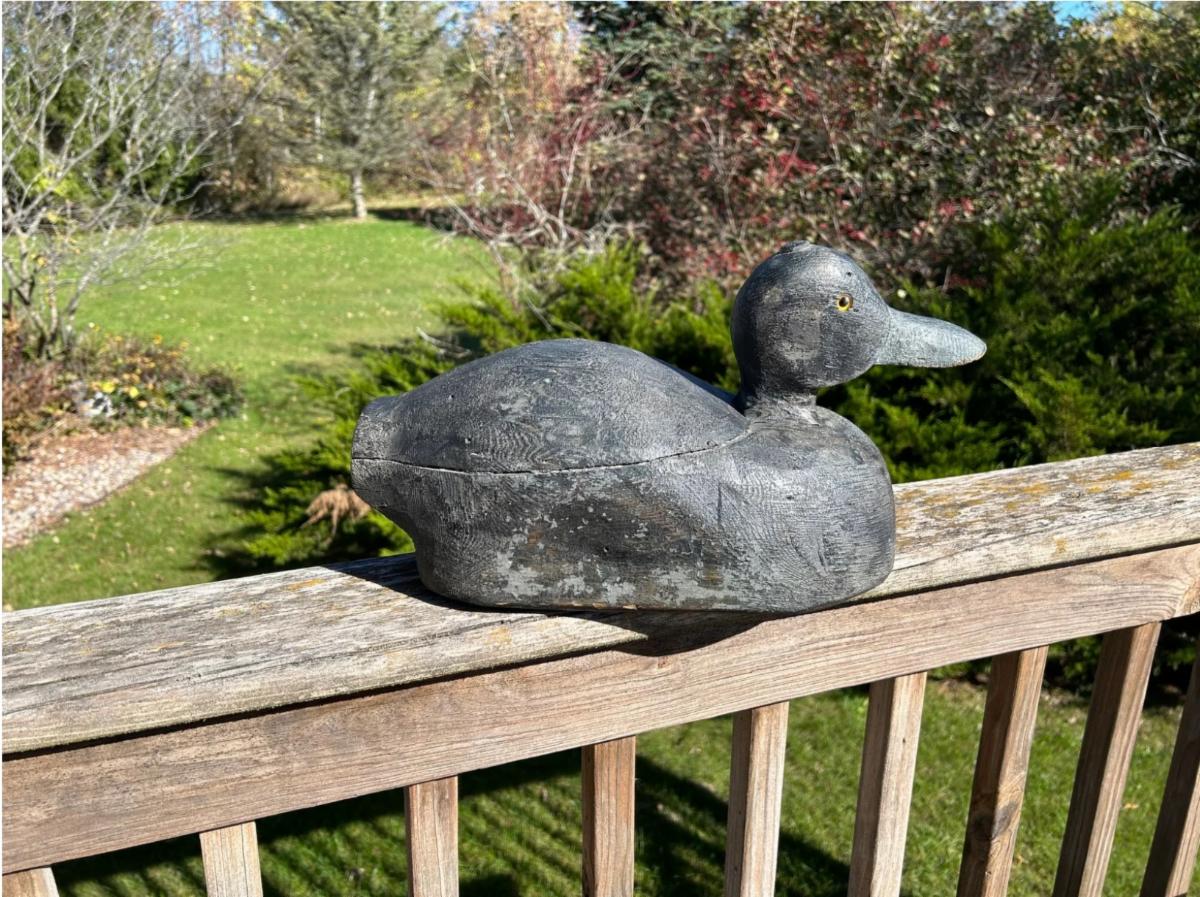
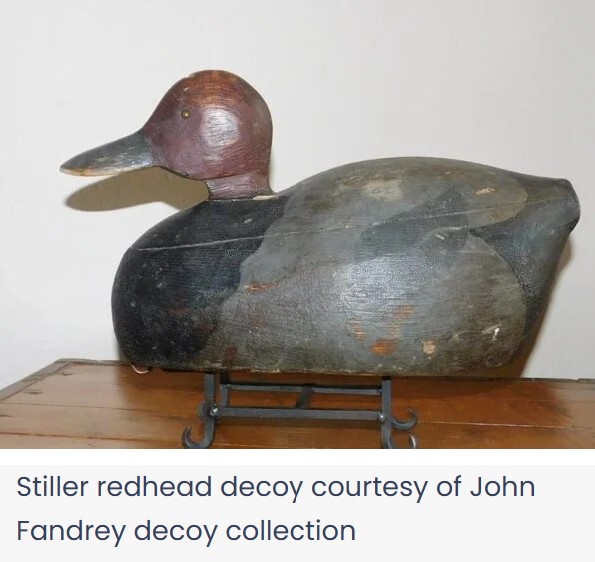
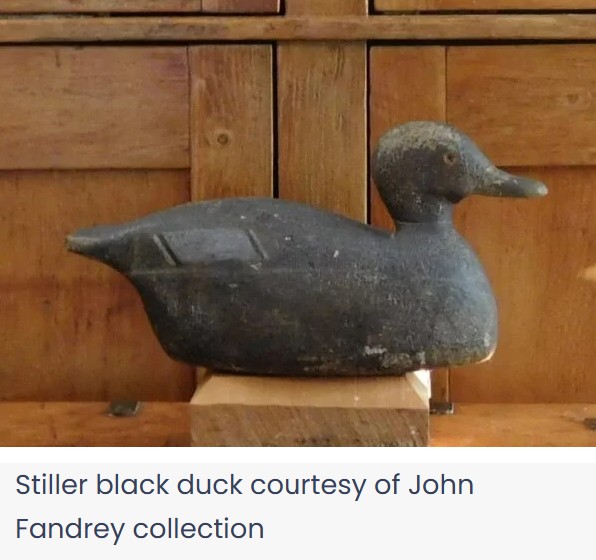
| According to records in Don Stiller’s book “Stiller Duck Camp” (1994, Alt Publishing), most of the decoys they used were carved by August, William, or Donald. Unfortunately, all the Stiller decoys I have seen have no documentation on the bottom, except for “Stiller” on a few. They carved solid-wood decoys, which were quite heavy, as most were oversized for use on the Bay. Later, they used commercial decoys made of plastic, Styrofoam, papier-mâché, and rubber to offset the weight. None of the commercial decoys available could attract ducks like their handmade, oversized, high-head wooden decoys, however!
Stiller decoys were fashioned from local pine or cedar, and most were crudely constructed. Their paint scheme was very basic with little detail or shading. Only a few of their decoys were provided feather detail, probably because of the hard use they saw and the need for frequent repainting. |
|
|
| It is unknown how many decoys the Stiller family carved, but most were working decoys made for their own use. We do know that several Stiller decoys are in the hands of local Wisconsin collectors and are considered “Folky” examples of Wisconsin decoy heritage. |
|
|
Need Not Be Present To WIN
|
|
|
Drawing 8:00 pm December 3, 2026 at the Christmas Bash at Rustic Manor 1848, 3115 State Road 83, Hartland, WI
Get your tickets securely online below.
|
|
|
|
|