|

|

|

|
A Finisher’s Mindset |
|
A beginner’s tactical blueprint for the spring woods |
|
By Jake Cline |
|
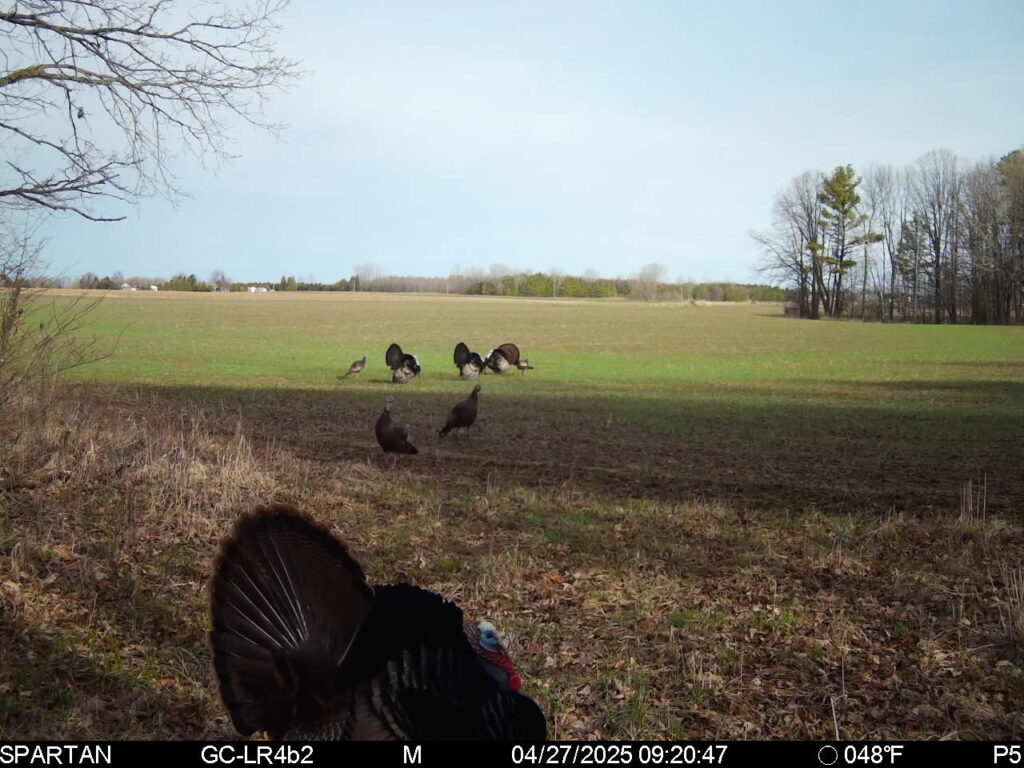
MUSKEGON, MI (March 6, 2026) – Twenty-five years ago, the trajectory of my life shifted in a single, frost-covered morning. I remember it with total clarity: the gray hardwood sky slowly bled into blue as the sun crested the ridge. The woods were beginning their morning stir—a soft, rhythmic waking of the timber that usually satisfies my soul. But then, the sound that changed everything cut through the chill. It was the thunderous, earth-shaking gobble of an Eastern longbeard, and at that moment, a lifelong obsession was born. Since then, the adrenaline hasn’t waned; it has only become more calculated. I’ve spent two decades guiding new hunters through that same high-stakes chess match, and if there is one universal truth I’ve learned, it’s that you don’t beat a bird with 20/10 vision and hypersensitive hearing by accident. You do it through elite preparation, woodsmanship, and a technical approach to your gear. The Logistics of the Hunt Before you ever chamber a shell, you must master the administrative side of the sport. Turkey hunting is highly regulated; bag limits, season dates, and legal hunting hours vary wildly by state and even county. Ignorance is never an excuse in the field. If the rulebook is unclear, your first call should be to the local game warden. Safety, however, is the ultimate priority. Unlike many big-game seasons, turkey hunters aren’t typically required to wear blaze orange. Because we use highly realistic calls and decoys to mimic the very thing other hunters are looking for, you must operate under the constant assumption that every movement or sound in the timber is another hunter. Identify your target and what lies beyond it—every single time. |
|

|
Beating the Ultimate Senses While a turkey’s sense of smell is practically non-existent, their eyesight and hearing are specialized survival tools that have evolved to detect the slightest inconsistency in the woods. Total concealment is your only path to success. This is where your choice of apparel transitions from a simple outfit to a tactical advantage. In the turkey woods, mobility is your greatest asset. I rely on the Blocker Outdoors Finisher Series because it is engineered for the “run-and-gun” reality of the spring season. The micro-fleece construction provides the silence required for a 4:00 AM infiltration, while the technical tailoring ensures you aren’t fighting your clothes when you need to drop into a seated position at the base of a lightning-struck oak. When the morning dew is heavy enough to soak through standard cotton, the Super DWR treatment on the Finisher gear keeps you dry and focused on the bird, not your discomfort. |
|

|
The Tool Kit: Sound and Strategy As a beginner, don’t get overwhelmed by the wall of calls at the local shop. Success usually boils down to mastering three specific categories:
Decoy Strategy: Decoys are a tool, not a crutch. In open fields, a hen and a jake decoy can trigger a gobbler’s territorial aggression. He sees a sub-dominant male with “his” hen and loses his cool. However, in tight timber, less is often more. If a tom hears your calling but can’t see the source, he is forced to keep searching—often walking right into your lap because he hasn’t “hung up” at a distance to admire the view. |
|

|
Scouting: Success Happens Before Sunrise Most “luck” in turkey hunting has a lot more to do with preseason homework. To find consistent success, you need to “read the room” of the hardwoods and locate the birds long before opening morning. Roost Identification Spend a few mornings before the season starts simply listening. Locate the roosting trees—typically large, mature hardwoods—by listening for gobbles at dawn. Drop a pin on your map for every bird you hear. This gives you a starting point so you aren’t guessing when you step out of the truck on day one. Reading the “Scratching” Turkeys are noisy feeders. They use their feet to kick away fallen leaves to find acorns, snails, or insects, leaving plate-sized bare spots on the forest floor. If the dirt in these “scratchings” is still moist and the leaves are piled fresh, the birds were there recently. Focus your efforts where this sign is prevalent. The Dust Bowl Turkeys “bathe” in loose sand or silt to maintain feather health and remove parasites. If you find a well-worn depression on a field edge or an old logging road, you’ve found a high-traffic “loafing” area. These are prime spots for a midday ambush when the morning action has cooled off. The Glassing Game Keep your distance. As the season approaches, you don’t want to “bump” the birds and change their patterns. Use quality optics to watch fields from a quarter-mile away in the evening. Note which fields they enter and the specific paths they take on their way back to the roost. Knowledge of these travel corridors is often the difference between a filled tag and an empty vest. |
|

|
Show Time: The Three Phases of the Day You’ve patterned your gun, scouted your flock, and you have total confidence in your Finisher Turkey Series gear. Your vest is loaded with your best shells and Last Flight calls. You know exactly what tree he’s gobbling from as you move through the dark, cool morning air. Now what? Phase 1: The Roost Hunt The most common mistake is getting too close. While the distance is a topic of debate, “bumping” a bird is a real threat. Turkeys have incredible vision, and if you get too close, you might spook a hen you didn’t even know was there. My rule: if I can use the terrain to get within 70 yards, I will. If the woods are open, I’ll stay 120 yards back. Start with soft “tree yelps”—just enough to let him know a hen has woken up nearby. Once he’s on the ground, use an excited fly-down cackle (swatting your hat against your leg to mimic wings) to tell him it’s time to meet. Phase 2: The Late-Morning Pivot When a tom flies down and suddenly goes quiet, he is likely “henned up.” He has reached his real-life hens and has no reason to come find you. This is when most beginners quit, but it’s actually when the best hunting starts. By 10:00 AM, the hens often work off to their nesting areas, leaving the tom alone and looking for company. If you hear a gobble at midday, it’s “game on.” These birds are often much more responsive than morning birds. Phase 3: The Afternoon Ambush Where legal, afternoon hunting is about the “dinner table.” Set up near known feeding areas or along the paths leading back to the roost. Birds are less vocal now, so don’t be surprised if they show up silently. Use the detachable seat cushion on your Finisher Pro II Vest to stay motionless and comfortable for the long haul. Avoid getting too close to the roost itself; you want them to keep using those trees for the rest of the season. |
|

|
A Legacy in the Timber I’ve always said that every person deserves to experience at least one spring morning in the turkey woods. It is a test of patience, woodsmanship, and your ability to remain calm when a twenty-pound bird is drum-beating just feet away. When you go, go prepared. Use gear like the Finisher Series that allows you to focus on the bird rather than the elements. Success in the turkey woods is a journey of a thousand small details, and when they finally come together, it truly is life-changing. Hunt smart, hunt safe, and cherish every second. |
|
Images by Jake Cline |
|
|
|

|
ABOUT NEXUS OUTDOORS Nexus Outdoors, headquartered in Muskegon, MI, USA, is a leading worldwide designer, marketer and distributor of performance, hunting and casual odor-controlling apparel, footwear and equipment under the ScentLok Technologies®, OZ®, Blocker Outdoors®, Whitewater, Hard Core® Waterfowl Hunting Apparel and Tree Spider® brands. It also owns American Range Systems, manufacturer and distributor of the world’s strongest and safest bullet traps. Nexus Outdoors is the only company with access to all scent-controlling technologies, including their patented Carbon Alloy™ and Cold Fusion Catalyst™ technologies, which provide superior success in the field. ScentLok and Blocker Outdoors are pioneers in the hunting industry, which many credit with creating a market focused on superior scent control to get closer to big game. |
You may also like
-
Warmth Through Loft ScentLok’s new BE:1 Puffy Jacket and Pant bring quality and field performance to a popular style MUSKEGON, Mich. (June 24, 2026) – Some things just look warm. Regrettably, a percentage of those things fail to live up to their appearances. Such is often the case with outerwear. More specifically, outerwear for hunting. Consider the puffy jacket. You can literally slide into one online for under $40. The Photoshopped Ai model sure looks svelte and comfy, but that unrecognizable brand is a little wonky. Unpronounceable, really. Never seen it before. And why is it only available from international ecommerce juggernauts? Because it’s crap. The polar opposite is true when new hunting outerwear drops from a legacy manufacturer, like ScentLok. And so it is with their new BE:1 Puffy Jacket and Pant. Dark Slate NEW Realtree XT-3 Delivering on-demand warmth, the BE:1 Jacket and Pant are extraordinarily comfortable and sporty looking to boot. Typically, ScentLok product descriptions open with the company’s “fabric-first” promise, but in this case, we’re diving into the insulation first. The outerwear duo’s Sorona® Aura insulation delivers higher fill power than similar weight polyester insulations, providing a lighter, warmer garment with less filling, which allows for greater packability. Made from the Sorona polymer, a performance fiber that is about 37% plant‑based rather than fully petroleum‑derived, Sorona Aura traps air while remaining thin and flexible and less bulky than traditional synthetic fills. It’s also breathable, designed to let moisture vapor easily escape, helping regulate body temperature and reduce that awful clammy feeling during active use. Sorona Aura also maintains its loft wash after wash. ScentLok takes another step by thermal-mapping the insulation into particular zones. In the BE:1 Puffy Jacket, for example, the chest area – the body’s furnace – contains 80g of Sorona Aura, while the arm insulation is throttled back to 60g to advance mobility. The BE:1 Puffy Pant features 60g of insulation throughout. The final insulation related trait is the baffling. Those sewn seams with individual insulation pockets aren’t for style-points only – they hold the insulation in place, defying gravity and time. Additionally, baffling promotes lofting, which means more warm air is captured. Despite the luscious and lofty insulation, the BE:1 Jacket and Pant are surprisingly packable. “They easily store in a field bag or daypack, so you can carry them into the field for a sit or take them off if the weather heats up,” said Allie. To thwart the olfactory senses of big game, the BE:1 Puffy Jacket and Pant include ScentLok’s Carbon Alloy® scent control technology. Carbon Alloy combines treated carbon, activated carbon, and zeolite to absorb odors emitted by your body. Carbon Alloy utilizes natural coconut shell carbon, as it has the largest internal surface area of any carbon on earth. This massive surface area promotes the adsorption of the broadest scent molecule range. It innately secures these molecules and holds them until you reactivate your gear in a household dryer. The BE:1 Puffy Jacket and Pant are structured of a durable, ripstop nylon outer fabric with soft peached lining – the lining feels easy on the skin and welcomes layering like butter. The shell is also DWR treated to help shed moisture and resist staining. The elbows are articulated for improved fit and mobility. Articulation, or pre-curvature, is a design feature where the fabric at the elbow is shaped and seamed to match the natural bend of the arm. The jacket also features a high-neck for added wind protection and an intelligently designed hood. The hood is constructed of three unique fabric patterns for better sculpting and hold, even while turning from side to side. Moreover, the hood is purposely cut to position behind your eye for better peripheral vision. The BE:1 Puffy Jacket also offers five strategically placed pockets for securing essentials and an adjustable waist to lock in heat and customize fit. The matching pants include specialty features as well, like invisible zippers on the center front fly and pair of front waist pockets. An internal drawcord can be tied on the outside or inside of the waistband. And 18-inch side seam zippers yield easy donning and doffing in the field, boots on. BE:1 Reactor Puffy Jacket FEATURES: Carbon Alloy® for maximum odor adsorption Thermal-mapped Sorona® Aura insulation for warmth without bulk and maximum packability (80g in the body, 60g in the extremities) DWR treatment helps shed moisture and resist stains Durable nylon outer fabric with a soft peached lining High-neck hood for extra protection Five pocket design for securing all your gear Articulated elbows for improved fit and mobility Adjustable waist to lock in heat and keep moisture out SIZES: SM – 3XL PATTERNS: Dark Slate and NEW Realtree XT-3 MSRP $219.99 BE:1 Reactor Puffy Pant FEATURES: Carbon Alloy® for maximum odor adsorption 60g Sorona® Aura insulation for warmth without bulk and maximum packability DWR treatment helps shed moisture and resist stains Durable nylon woven ripstop outer fabric with a soft peached lining Invisible zipper for the center front fly 2 invisible zipper front waist pockets Elastic waistband with internal drawcord that can be tied on the outside or inside of the waistband Rib knit bottom hem at lower back leg 18” side seam zipper for easy on/off SIZES: SM – 3XL PATTERNS: Dark Slate MSRP $219.99 NOW AVAILABLE View Online Version ABOUT NEXUS OUTDOORS Nexus Outdoors, headquartered in Muskegon, MI, USA, is a leading worldwide designer, marketer and distributor of performance, hunting and casual odor-controlling apparel, footwear and equipment under the ScentLok Technologies®, OZ®, Blocker Outdoors®, Whitewater and Tree Spider® brands. It also owns American Range Systems, manufacturer and distributor of the world’s strongest and safest bullet traps. Nexus Outdoors is the only company with access to all scent-controlling technologies, including their patented Carbon Alloy™ and Cold Fusion Catalyst™ technologies, which provide superior success in the field. ScentLok and Blocker Outdoors are pioneers in the hunting industry, which many credit with creating a market focused on superior scent control to get closer to big game.
-
Chasing the Speed Goat TUO digital marketing specialist Trey Douglas breaks down regional tactics and gear requirements for hunting the American pronghorn
-
Bibs are Back…and Available ScentLok’s long awaited touch activated, cooling-infused Savanna Fuse Bib is now stocking and ready for your early season hunts
-
Whitetail Perfection for Women Hardcore female hunters can now purchase the tailored ScentLok Women’s Alpha Elite Jacket and Bib
-
DNR Announces 2026 Spring Turkey Season Results